This Weel in Tech 1085 transcript
Please be advised that this transcript is AI-generated and may not be word-for-word. Time codes refer to the approximate times in the ad-free version of the show.
Leo Laporte [00:00:00]:
It's time for TWiT this Week in Tech. Marshall Kirkpatrick is here. Larry Magid, my friend Jacob Ward. We've got a great panel and lots to talk about, including the biggest change to Google search in 25 years. Jacob was at the Musk vs Altman trial. He'll talk about what it was like to be sitting there and watching the whole thing. And there's good news and bad news. That creepy listening tool for targeted ads didn't actually work.
Leo Laporte [00:00:29]:
And the FTC says, we're gonna fine you. It should have worked. What? All of that and more coming up next on Twit podcasts you love from people you trust. This is twit. This is twit this week in tech, episode 1085, recorded Sunday, may 24 20. Waiting in line with sam. It's time for TWIT this Week at Tech, the show where we cover the week's tech news. And at first I thought the tech news was kind of weak this week, but then I took a stronger look and fortunately we have a panel that is up to the task.
Leo Laporte [00:01:21]:
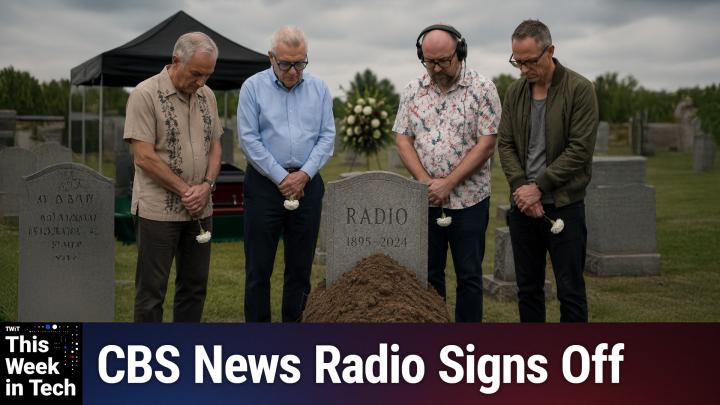
Larry maggot is here. ConnectSafely.org founder and president, but also, like me, a refugee from radio. We're going to talk about the demise of CBS News in a little bit. Good to see you, Larry. Welcome back.
Larry Magid [00:01:39]:
Good to see you, Leo, as always.
Leo Laporte [00:01:42]:
And we also talk about your blog post about how AI helped you understand why you weren't feeling so good the other day. But that's to come. Also with us, Marshall Kirkpatrick. It's always great to see Marshall, longtime a tech journalist. His latest, though, is a browser extension that applies AI to the pager on called what's up with that? Hey, Marshall, good to see you. Thanks, Leo, Welcome. Marshall was on Intelligent Machines, but you were on TWIT many times back in the day. You're kind of what I would say is an old timer.
Leo Laporte [00:02:18]:
A twit old timer. Also with us, Jacob Ward. Jacob is the author of a great book called the Loop, which presaged what's going on today with AI. He was absolute, you know, ahead of his time on that one. He's back. You're back. I see on CNN now, which is great.
Jacob Ward [00:02:38]:
Yeah. I have a contributor role at cnn. Very exciting. Appreciate it. Leo.
Leo Laporte [00:02:41]:
You also see him, of course, every month on Tech News Weekly. And his newsletter is the Rip Current. The Rip Current Dot com. So I don't know where to begin here. We started talking about radio off the air and I said, wait a minute, hold on, let's hold that for the show. Because Larry, you asked me kind of a leading question. Is radio dead right?
Larry Magid [00:03:11]:
He gave me bad news.
Leo Laporte [00:03:13]:
Well, it's funny because for years I've been saying, who listens to the radio? And often our audience says we do.
Larry Magid [00:03:20]:
Yeah.
Leo Laporte [00:03:20]:
I said, do young people still listen to the radio? But I think maybe in the car people still listen. I don't know.
Larry Magid [00:03:25]:
I mean, CBS News radio as of last week, before it died on Friday, had 22 million listeners on 700 affiliates across the country. That was below their peak. They peaked at 33 million during my career. But they claim that they had still had 22 million listeners a week, which is more than CBS Evening News gets. In fact, more than all the evening news gets combined.
Leo Laporte [00:03:49]:
Wow. Wow.
Larry Magid [00:03:52]:
At least they claim.
Leo Laporte [00:03:53]:
Well, who, who do you think that is? I mean, you know, it's funny, Jacob, when I get in the car, I fire up, tune in and listen to cnn. That's my news radio.
Larry Magid [00:04:02]:
I listen to CNN too.
Marshall Kirkpatrick [00:04:04]:
Yeah.
Jacob Ward [00:04:04]:
I was once, I was talking to an entrepreneur recently living in Lagos, Nigeria, who said that he had just taken a big executive job at a big radio station there and was talking about how hot radio is still in West Africa. That for a lot, for a lot of people, it is still the dominant media, dominant music. It was like, it was like talking to somebody from another, you know, from a time capsule, from a time traveler. And he was just saying how cool it is to combine the social media stuff with what's going on in radio. Anyway, it was very cool to imagine. But we are not living in that kind of world here, no question.
Leo Laporte [00:04:39]:
Well, as William Gibson once said, the future is here. It's just not evenly distributed. There's some of us living in different decade than others. If you are in a country, a developed country like this, where there's Internet floating through the air and available to everyone, everywhere, all the time, thanks to our cell phones and cell service. I don't understand why you would listen, why you would even by the way, people still subscribe to Sirius. I don't understand why you can get all that. Maybe I guess if you're not always in cell service.
Larry Magid [00:05:12]:
So as I mentioned to you off air, I got an invitation to go to this event in New York on Friday.
Leo Laporte [00:05:17]:
You went to the funeral for.
Larry Magid [00:05:19]:
And do I want to spend all this time and money flying across the country for a two hour luncheon? I said, yeah, if a good friend died, I would go to their funeral.
Leo Laporte [00:05:26]:
It's like that, isn't it?
Larry Magid [00:05:27]:
And, and this was the death of a radio network 99 years old. Edward R. Murrow was one of the very first people.
Leo Laporte [00:05:35]:
Tiffany Network.
Larry Magid [00:05:36]:
The Tiffany Network. It was historic, and it was still the largest radio news network in the. In the. In the country as of. Until this week. And so I showed up and first of all, it was a wonderful event. I got to meet all of these great people who I know by name and voice, but because I work remotely, I rarely got a chance to see them in person. And, you know, it's over.
Larry Magid [00:06:00]:
We pulled. They pulled the plug on us at 11:31 Friday night. We did our last broadcast, and now all the stations are moving over to ABC News because they still have a new service for whatever.
Leo Laporte [00:06:13]:
That's kind of sad. Yeah. Well, I mean, is there such a thing as CB is. I mean, is CBS was now owned by Paramount?
Larry Magid [00:06:22]:
Is CBS is owned by Paramount, which is Larry Ellison's son, David, I think his name is. Yeah, yeah.
Leo Laporte [00:06:28]:
I mean, Skydive.
Larry Magid [00:06:30]:
I could sell it.
Leo Laporte [00:06:31]:
I would buy that.
Larry Magid [00:06:32]:
No, I'm keeping it.
Leo Laporte [00:06:33]:
Yeah, that's. That's actually pretty cool.
Larry Magid [00:06:35]:
Yeah.
Leo Laporte [00:06:37]:
Do they all. Did they own CBS News Radio?
Larry Magid [00:06:40]:
Did they get. So what happened was CBS divested their stations about six or seven years ago that became radio stations they used to own kcbs, for example, in the Bay Area, and WCBS in New York.
Leo Laporte [00:06:51]:
I grew up listening to wcbs. That's where I heard that RFK had been assassinated.
Larry Magid [00:06:55]:
Yeah. And I used to be on WCBS daily. I love being on wcs and I
Leo Laporte [00:06:58]:
heard you all the time. Yeah, I was a child, of course, at the time.
Larry Magid [00:07:02]:
Absolutely. No, I was. I was on the air as recently as Friday because I still do a seg. I still do a feature even though I'm no longer.
Leo Laporte [00:07:12]:
I mean, I. Look, radio's in my heart. In December, I will have. Will be the 50th anniversary of my getting my FCC third ticket so I could work in radio. I will always consider myself a radio guy. And that's why I do podcasting, because it is the air apparent to radio. It's still audio focused. It's.
Leo Laporte [00:07:31]:
It's some person talking to a microphone in your ear.
Larry Magid [00:07:34]:
These are delivery mechanisms. At the end of the day, it's. Exactly.
Leo Laporte [00:07:37]:
Who cares how it comes to you?
Larry Magid [00:07:38]:
I mean, there's a difference, though. I don't know. Maybe you guys know of a podcast that would compete with something like the CBS radio, you know, hourly news, where we had a three minute.
Leo Laporte [00:07:47]:
Well, there was one, but OpenAI bought it. Right. The Tech Pros podcast network for hundreds of millions of dollars.
Jacob Ward [00:07:56]:
Yeah, that one was crazy.
Leo Laporte [00:07:58]:
And then Marc Andreessen's venture capital arm has a. They did something called Monitoring the Situation, which is a direct clone of TPBN or TBPN, but those are both on YouTube.
Larry Magid [00:08:14]:
They're.
Leo Laporte [00:08:15]:
There's several hours a day streaming and they have really more like a CNBC look and feel to them.
Marshall Kirkpatrick [00:08:22]:
But they are not independent. Right. They're not playing the role of a journalistic outlet holding power accountable. It is an adversarial landscape. And I presume, right, there's like some who Killed Robert or who Framed Roger Rabbit kind of stuff going on here where, you know, this isn't just the. The unstoppable march of time forward. This is around corporate consolidation and regulatory capture and media capture and a part of a larger shift towards authoritarianism.
Leo Laporte [00:08:58]:
Well, and I should mention that, you know, not only did CBS Radio News die on Friday, but so did the Stephen Colbert show the next day. It was actually very funny. Stephen Colbert shows up on Public Access. That was awesome.
Jacob Ward [00:09:12]:
So funny.
Leo Laporte [00:09:14]:
Well, but it's kind of not funny. It was called Only in Monroe. I guess he'd done the show once before and it was, by the way, watch it because it's hysterical and Jack White is on. I mean, it's really good, funny stuff. But it is a local access in.
Larry Magid [00:09:31]:
I've never heard Michigan City, let alone.
Leo Laporte [00:09:33]:
That tells me tiny, brilliant. Paramount plus took it down. They don't own it. They don't own him. But they issued a strike to YouTube and they have. It has been taken down globally.
Larry Magid [00:09:50]:
What right do they have to do that?
Leo Laporte [00:09:51]:
I have no idea. This is the problem with YouTube takedowns.
Jacob Ward [00:09:54]:
Also the world's dumbest thing. Give it as much, you know, oxygen as possible, right? That's the thing.
Leo Laporte [00:10:01]:
Like Streisand effect, right?
Jacob Ward [00:10:02]:
You just put it right into the news cycle by doing that. I feel like you just need these. Like, there needs to be like C Suite training and like, here is how humor works.
Leo Laporte [00:10:10]:
How stupid can you be?
Jacob Ward [00:10:11]:
Here is how attention works. Like there just isn't. Isn't good training at that level.
Larry Magid [00:10:15]:
I owe Brendan Carr a debt of gratitude because I didn't really pay much attention to Jimmy Kimmel until he got banned. Now I record it every night and watch it every single morning. I watched a monologue and I never did that until they took him off the air.
Leo Laporte [00:10:29]:
So Paramount, Larry Ellison's son, I think, feeling the pressure from Brendan Carr's fcc, decided to pull Colbert. ABC showed a little bit of spine, not pulling Jimmy Kimmel. But I think some of that was the public reaction to that.
Larry Magid [00:10:46]:
Oh yeah.
Leo Laporte [00:10:48]:
Is that why CBS Radio News went away or is that more an economic.
Larry Magid [00:10:51]:
There's what they're okay. What my friends, including up until a couple of days ago, senior management at the newsroom said was that we were slightly profitable. They were in the black and boy, being in the black and media, I don't care how close you are to the red, as long as you're in the black, that should be a good sign. Now, CBS will say it was for financial reasons, but, you know, do you think it's political? I think it's political. I think look for all of the criticisms of mainstream media and I understand them and I have my own critiques. We worked really hard to tell the truth. I mean, lying, knowingly lying on CBS News radio was a fireable offense. And I can't say the same for some, some of the other shows out there, networks out there.
Larry Magid [00:11:36]:
And you know, I don't think we had a left wing bias. I think we really did have a straightforward news gathering bias which may be very uncomfortable to certain people in power. Telling the truth can be dangerous if you're basing your administration on lies. And that's. And we were just telling the truth. That's all we were doing.
Leo Laporte [00:11:59]:
Yeah,
Larry Magid [00:12:01]:
now I was a commentator, I got to editorialize a bit. But still the network, it's pretty hard
Leo Laporte [00:12:06]:
in a world where podcasting exists, where the Internet exists and Brendan CARR and the FCC's reach does not extend to that. I mean, they may try to make it, but it's pretty hard to shut down dissent, commentary.
Larry Magid [00:12:21]:
And the real question, and Jacob, as you know, CNN could very well be likely is going to be owned by these same people that own cbs. The question is, how relevant is it? Does it really matter given the Internet that Ellison owns CBS and may soon own?
Jacob Ward [00:12:38]:
Yeah, here's my argument about that. So I, I, so yeah, I should say, right, I'm a contributor at cnn. I'm not a full time employee, but I have a relationship with cnn. So I'm not speaking for CNN here in any way. But I, you know, this question of, right, does it matter who owns these platforms in an age of, of declining relevance for mainstream media, blah, blah, blah. I hear that. On the other hand, so I'm part of a sort of informal network of creators and we, there's a Slack channel that goes around and one of the people the other day was said, and these are people who are like, you know, they might have some Kind of like, you know, posts on like they did, they tend to do stuff about knitting or cooking or whatever it is. And they, they started in some cases talking about current events.
Jacob Ward [00:13:23]:
And before they knew it, they were like some of the top voices in the nation on current events. And so one of them said, hey, I've just been leaked some documents from this like government agency and I don't know what to do with, with them because I have no training, right? And, and they were like, you know what, what kind of quick journalism training can I get to figure out what to do? And so I put together a little like informal kind of like crash course in journalism, like a journalism 101 for these folks because their numbers are so huge and their relationship with their audience is so close that these people, you know, inside sensitive government facilities are leaking them stuff because they think this is the person to go to as opposed to the BBC or CNN or whoever else. So crazy. Also, when I then did the 101 thing, I basically said to people like, listen, you guys are operating right now in a world in which the, there's a primary layer of journalism that you have come to expect will always be there. The Anderson Cooper hard hitting interviews, the, you know, the rocket fire into Bahrain and the footage you get from the news of that. And then you guys consider yourselves to be in this sort of like commentary class, you know, as a, as a, you know, as a, as in, you know, you're offering your perspective on the news, which is what so many of these people are doing. And I was like, what happens when the primary goes away? Because you're gonna, you know, these folks also basically like, they all need that, that primary layer in order for their secondary commentary layer to work. So the, so everybody wants it there even.
Jacob Ward [00:14:57]:
And, and, and the, what we know is that like young people actually consume an enormous amount of news. They just do it through the clips
Leo Laporte [00:15:05]:
that watch TikTok they're doing.
Jacob Ward [00:15:06]:
Yeah, which clips? The news. That's right. That's right.
Leo Laporte [00:15:09]:
That's their news.
Jacob Ward [00:15:10]:
And so the current system is really, even though the money's not flowing to the primary layer of journalism, it's still very relevant and people still really want it. It's just being consumed in this whole other way. And what I was saying to these people, like, are you ready to be the primary layer? If the primary layer falls apart as
Leo Laporte [00:15:29]:
a business model because somebody has to afford it. This is, this is completely analogous to what's happening with AI, which is AI has eaten all the primary sources. But, and in some respects, putting the primary sources out of business. But they desperately need those primary sources
Larry Magid [00:15:49]:
and citizens bureaus all over the world. That's a really expensive operation. No, no. You know, YouTube star is likely to have 20 bureaus around the world and reporters gathering facts.
Jacob Ward [00:16:01]:
The thing that came down the other day. Sorry, Marshall, I don't mean to cut you off there. The thing that came down the other day that I was really freaked out about was Meta announced a new policy that they're going to spike creators who post unoriginal content.
Leo Laporte [00:16:13]:
What?
Jacob Ward [00:16:14]:
Yeah, that they, and they, and they talk about in the context of like, oh, we're protecting the creator. Adam Masseri had this piece, you know, this post about it. We're protecting creators and their original works. And so if you're, if you're, what you post is not substantially transformed or not yours specifically, then then they're going
Leo Laporte [00:16:31]:
to like, that's interesting.
Jacob Ward [00:16:32]:
Not only will it, will it downgrade, that content will downgrade you as a creator. So like, the people in my cohort are like panicked because news footage is one of the main things that goes around for them. And I was thinking to myself, boy, I don't know if that's Meta's intention.
Leo Laporte [00:16:44]:
Oh, they're morons. You know, what they are could really
Jacob Ward [00:16:47]:
be bad for news, for understanding the news. Like, it could really screw up people's sense of what's going on in the world.
Leo Laporte [00:16:53]:
No, and if you think about it, it's counterproductive. What made TikTok a success, they bought musically. And the success of TikTok was people lip syncing to other people's music. And eventually TikTok really became about collabs and responses and taking existing content and repackaging it. And I think Meta's just, they're on the wrong side of history. But this is nothing new for Meta.
Marshall Kirkpatrick [00:17:23]:
So Barbra Streisand was already rich, right, when the Streisand effect came into being. She could, she could get in there and she could withstand the pressure. She could freak out. I'm sure she was on the phone with her lawyers, et cetera, et cetera. But I would contend that when the powers that be put pressure on people, if those people are already deep pocketed and have big legal teams, then it becomes a Streisand effect situation. But if they are more on the margins, you. Then it becomes a slap situation, a strategic lawsuit against public participation, because they don't have the capacity to withstand that barrage.
Leo Laporte [00:18:09]:
Well, that's why we defend section 230, because if you are Meta. If you are Google, if you are a big company, you can defend yourself in court. But people like us and our little chat rooms and our little Mastodon instances in our forums, we can't. And that's why Section 230 is necessary.
Larry Magid [00:18:30]:
Well, I have a question.
Leo Laporte [00:18:30]:
So I've always.
Larry Magid [00:18:31]:
I was always a big defender of 230, but I'm questioning whether it's relevant in the age of algorithms. If Meta is amplifying posts, doesn't that make them a publisher? They're not just running a forum. It's not like the old days of CompuServe forums where anything goes, you know, they are. They are amplifying.
Leo Laporte [00:18:48]:
That's right. That's what the jury decided, isn't it? In the.
Jacob Ward [00:18:51]:
Yeah, the design. The design was not.
Leo Laporte [00:18:53]:
I mean, they didn't take off product design.
Jacob Ward [00:18:56]:
Yeah. They just said the design was. They were culpable for the. The effect that the design has on your behavior, which is I. I think is good. It keeps.
Leo Laporte [00:19:03]:
You know. By the way, my chat rooms don't have an algorithm. My Mastodon.
Jacob Ward [00:19:08]:
That's right.
Leo Laporte [00:19:09]:
Just is chronological, baby. My forums, chronological. There is no editorial. So if that's the case. Yeah, maybe you're right. Maybe section 230 does not and should not defend the algorithmic publishing that is, I guess, you know, in a way, publishing. And that's what that jury found in San Jose, but.
Larry Magid [00:19:28]:
Exactly. I'm a big believer in 230 in general.
Leo Laporte [00:19:32]:
Yeah.
Larry Magid [00:19:34]:
Turned off the algorithm on Facebook and made a chronological. And it got really boring. Now that maybe because I have thousands of, you know, I've got followers and friends before they allowed followers, I used to accept all my. Everybody's friends because that was the only way I could have people follow me.
Leo Laporte [00:19:47]:
Right.
Larry Magid [00:19:48]:
So maybe that's the problem, but.
Leo Laporte [00:19:50]:
No, no, it's not. It's the same problem with Mastodon. That's why nobody likes Mastodon because it's not algorithmic.
Marshall Kirkpatrick [00:19:56]:
So I track my news through a system that I built myself that has an algorithm tuned specifically.
Leo Laporte [00:20:03]:
Your algorithm. Yeah.
Marshall Kirkpatrick [00:20:04]:
For my specific interests.
Leo Laporte [00:20:06]:
Yeah.
Marshall Kirkpatrick [00:20:06]:
I've got a few areas of interest and I click a button and it just says, Whoosh. Here's the 10 most relevant articles from across everything. You're monitoring about that each day. And it's.
Leo Laporte [00:20:18]:
Maybe that's the future is hyper personal.
Jacob Ward [00:20:21]:
Super interesting.
Leo Laporte [00:20:22]:
I love that.
Jacob Ward [00:20:23]:
Marshall, can I ask you a question? So, like, let's say you. Let's say we scale that up, right? And each of us gets to construct our Thing. So I have something sort of, sort of like that as well. And I was just thinking like, okay, no one's making money off of your system or mine. Not least because no one's centralizing your behavioral profile and bucketing it with all of the other behavioral profiles. Right. But is there like a money making opportunity at scale for each person personalizing a newsfeed?
Leo Laporte [00:20:54]:
Can I just suggest that that's what we do here at TWIT is we pick the stories that we think are important and we talk about them and that editorial judgment is what we monetize. That's right, sure.
Larry Magid [00:21:06]:
Wow, what a concept. You think the New York Times might
Jacob Ward [00:21:08]:
start at that level?
Leo Laporte [00:21:10]:
That's called journalism.
Jacob Ward [00:21:12]:
As a broadcaster, it works. Right, but as an individual individual, like as a bunch of individuals with a one to one relationship with the algorithm.
Leo Laporte [00:21:19]:
I'll show you something I subscribe to. It's called no Scroll. I found it on, on Twitter. It is an AI. It says no scroll monitors the situation so you don't have to. Every morning at 9am no scroll sends me a list of stories. I told it ahead of time, what I'm interested in. And it sends me a list of stories on Telegram.
Leo Laporte [00:21:41]:
It's a Telegram bot that I might want to cover. It's 10 bucks a month and it's one of the many tools I use to keep track of stories we want to cover on the show. I don't know. I presume, I mean, it's 10 bucks a month. They're monetizing it. I don't know how big it's become. I'm trying to get the founders on to talk about it. So there are ways to do this.
Leo Laporte [00:22:02]:
And Marshall, you're kind of monetizing it with what's up with that? Right?
Marshall Kirkpatrick [00:22:06]:
Yeah, what's up with that? And then, so that's my X ray tool. But then I've also got a companion radar type tool called Hawkeye and they.
Jacob Ward [00:22:15]:
Is that available? Yeah, it is.
Leo Laporte [00:22:17]:
Oh, okay. Where's that?
Marshall Kirkpatrick [00:22:19]:
It's at what's up with that app? Hawkeye.
Leo Laporte [00:22:24]:
Okay.
Marshall Kirkpatrick [00:22:25]:
And, and so I, I'm setting that up for organizations. I sell that. And, and what it does, we, we map out, you know, you give us some examples of the kinds of organizations you're interested in. I go out and map out hundreds of related kinds of organizations. Organizations monitor them each day. Yeah. And then click on one of those magazine covers there in the bottom. Right.
Marshall Kirkpatrick [00:22:46]:
One of the things that it does is publish. And then if you click through on the right side There's a. Yeah, an arrow there. It generates these. Magazine.
Leo Laporte [00:23:00]:
This is analogous to something that's been around in journalism for decades, which is a clipping service. Right, Right. If you're Barbra Streisand, you pay for a clipping service that will send you every day all the places you were mentioned. And then Google did that for. Still does that. Right. Google
Marshall Kirkpatrick [00:23:18]:
on top of it, because it takes a whole bunch of related stories.
Leo Laporte [00:23:21]:
AI makes it better.
Marshall Kirkpatrick [00:23:22]:
Find me, do some cluster analysis and see what some common themes are and generate some original analysis covering those themes.
Jacob Ward [00:23:31]:
I will say one of the things that I think none of this solves for, and it's a comment brought up on your discord right now. I don't know how you say your name. L, R, A, U.
Leo Laporte [00:23:41]:
That's Larry. It's Larry Gold. It's Laurentium Gold. This is good.
Jacob Ward [00:23:46]:
It's classic twit. I can't read it out loud, but it looks good.
Leo Laporte [00:23:49]:
It's a nerd name.
Jacob Ward [00:23:50]:
Yeah. But he says, what I find with algorithms tuned to me, you don't find anything outside of my bubble. That's my number one problem. Because, like, in the.
Larry Magid [00:23:58]:
And.
Jacob Ward [00:23:58]:
And not just in the, like, ideological sense, which is bad. You know, it makes a lot of sense, this thing of, like, we're going to serve up, like, intelligence, you know, tailored to your specific job function.
Leo Laporte [00:24:08]:
Great.
Jacob Ward [00:24:09]:
What I want is the old experience of, like, wandering through the, you know, a paper edition of the New York Times, bumping into some crazy article about something weird going on in Indonesia that I would never read about otherwise and that no algorithm would ever predict I'd be into and being like, wow, that's really interesting. His wife organized the murder of this guy. And that's crazy. You know, like the, The. The random discovery stuff.
Leo Laporte [00:24:34]:
And as a newsletter writer, that's kind of important. Right? Because you want to find not everybody. So I am in exactly the same boat. 90% of the stories we do are the same stories. Everybody who's covering tech does, and I use the AI to do that. This is the daily tech briefing that my AI generates for me for all three shows that I do. And so I let it do that. But you're exactly right, Jacob.
Leo Laporte [00:25:00]:
I don't get from that the weird, the oddball. So.
Marshall Kirkpatrick [00:25:05]:
So my favorite experience, if I may, with that I'm a subscriber to a book publisher called PM Press, where for 30 bucks a month, they just send me every book they publish that month. And. And I get all kinds of, like, wild stuff that I wouldn't have chosen that's brilliant to buy until it shows up in my mailbox in a package about, you know, Appalachian coal, minor labor disputes. And yeah, it's really neat.
Larry Magid [00:25:34]:
So, you know, I think about that because in the end, in the days of newspapers, let's say you're a sports fanatic, that's really all you care about. You still have to pass the front page on the way to the sports section. So you're going to get some information. But now you could just go to ESPN or whatever, your sports source and completely ignore what's happening in the rest of the world.
Leo Laporte [00:25:52]:
Well, worse than that, you could say, I only want to know about football, don't tell me about baseball.
Larry Magid [00:25:55]:
Right.
Leo Laporte [00:25:56]:
I mean, you can really narrow it down. So I think there is a obligation on the part of consumer information consumers to try to kind of reach outside their filter bubble. You know, Eli Pariser wrote that very famous book of the filter bubble and Jeff Jarvis has always argued against it. He said, you know, you can say, well, you're only seeing stuff you're interested in, but it is the nature of the Internet. That stuff comes in over the transom that you would not see otherwise. You know, and I think that that's, I think that's also true. I don't.
Larry Magid [00:26:27]:
Yeah.
Leo Laporte [00:26:28]:
I mean, how does Tick Tock work?
Jacob Ward [00:26:31]:
Tick Tock is exactly that. Exactly.
Marshall Kirkpatrick [00:26:33]:
It's, it's just pure, isn't it? Just perpetually refined. Exactly the kind of stuff you like.
Jacob Ward [00:26:38]:
Yeah. The funny thing about Twitter, about Tick Tock is that it used to be much more like random awesome stuff. You'd get like a Jamaican truck driver teaching you how he makes breakfast in his cab. You know, that kind of stuff where you're like, wow, I would never bump into this on any other platform. Now it's become a little more specific and you have to basically reset your feed every so often because it starts to peg you. And my thing is, you know, starts to figure out who you are. Peg you is the wrong word.
Leo Laporte [00:27:06]:
Yes, please don't say that. Thank you. But that sounds painful.
Jacob Ward [00:27:09]:
But the, that, that, you know, narrowing of, of what it gives you, it gets boring really quick. And for me, what I'm always trying to do is convince it that, that I'm somebody demographically that I'm not. So I'm always trying to convince it that I'm like a 25 year old black woman or whatever. Like I'm trying to like heart stuff about or whatever. And then I'll linger too long on something and it'll be like, oh, you're a white guy in your 50s. And it's like, it's like camp. You need more bikinis, archery, no cars, and Jack Reacher. And I'm like, you know, pickleball.
Leo Laporte [00:27:39]:
Pickleball. That's what you want. You want pickleball so much.
Jacob Ward [00:27:41]:
Pickleball.
Larry Magid [00:27:41]:
Exactly.
Jacob Ward [00:27:42]:
I'm like, God damn it.
Leo Laporte [00:27:43]:
I have to. My daughter, who's a millennial, taught me that. She said, dad, you have to really. She said, what you really need is multiple accounts because it pays. I don't know if TikTok's as sophisticated anymore now that it's owned by Larry Ellison, but it pays attention to what you look at at morning, noon and night. It is very fine tuned. I mean, this was really their secret sauce, right? She says, but you can completely cultivate by what you linger on, what you watch and what you don't linger on. And she.
Leo Laporte [00:28:10]:
I'm scrolling through. I said, see, I get all these bikini pictures. She says, don't stop there. Because,
Larry Magid [00:28:18]:
Leo, I'm glad you admitted that, because I get that even on Facebook reels. And I'm almost reluctant to admit it because it's kind of acknowledging that maybe once in a while I actually look at this stuff, which of course, I never.
Leo Laporte [00:28:29]:
Men we can't help.
Larry Magid [00:28:30]:
My wife is watching now.
Marshall Kirkpatrick [00:28:32]:
It's not just men that love boobs, for goodness.
Larry Magid [00:28:34]:
You can't look away. I know.
Leo Laporte [00:28:36]:
I don't want to stop. I really don't. So I have noticed that, you know, I. I took Instagram and TikTok off my phone and they've been off for six months. And I went back to Instagram because unfortunately, my son is an Instagram influencer. And I kind of. If I'm going to find out what Henry's up to, I have to every once in a while check Instagram. But I do notice that Instagram, I think, got sensitive to that.
Leo Laporte [00:29:00]:
I don't get the thirst traps I used to get. I mean, used to be all I would see on Instagram was young women basically trying to get you to join their onlyfans. And that's stopped. So I think they are playing with the algorithm a little bit.
Larry Magid [00:29:15]:
You know, Leo, you remind me of this preacher. Years ago when I took ads on safekids.com somehow I got this letter from a preacher, said, you know, I found a sexually provocative ad on your website and you should not be. You know, a site on kid safety should not be. I said, I'm sorry to tell you, Reverend, but the. It's Based not on what's on my website, it's based on what you're looking at, sir.
Leo Laporte [00:29:39]:
You know, my website just serves up what you want, Rev.
Larry Magid [00:29:42]:
That's right.
Marshall Kirkpatrick [00:29:44]:
Well, so there, there is a continuum, right of interests between like a liberal Democratic prioritization on diversity and growth. And instead, you know, people say if you're trying to reach across the aisle, like make appeals to purity and tradition and the instruments of power buying up these social networks and tuning the algorithms are more aligned to the latter. And it's a self reinforcing cultural.
Leo Laporte [00:30:18]:
That's what Jonathan Haidt has said.
Larry Magid [00:30:20]:
The problem is that purity used to be a Republican value. I'm not sure it is anymore. I mean, I know it's not.
Marshall Kirkpatrick [00:30:25]:
Talking about it appeals to purity are.
Larry Magid [00:30:27]:
Oh, you. Oh, I see. Talking about purity.
Leo Laporte [00:30:29]:
Yeah, yeah. Jonathan Haidt, before he became the guy who says kids are being ruined. Kids today being ruined by. In social media, wrote a really good book, I interviewed him on it about why we can't talk to one another. And he really talks about the left and the right and the values that each side holds highest. As you said, purity is, is, is one of them on the more conservative side. And you know, fairness, it's really interesting. And you're right, that would, that would end up getting self perpetuated.
Leo Laporte [00:31:04]:
But I, so, I mean, I think we've talked about solutions here. I think this is a potential flaw with AI. I think one of the things that's happening with AI, we're all four of us, examples of this is people are writing their own custom filters and custom services and custom search tools.
Marshall Kirkpatrick [00:31:23]:
Some people are, but it's a, it's
Leo Laporte [00:31:26]:
not everybody, obviously, but the, but those of us in the, in the cutting edge of tech are very. Everybody. It's so funny because I, I was telling Larry this, I have people on the show, I used to have to say, well, do you use AI now? It's not, it's, it's a given. Because if you're covering technology, this is one of the most consequential things that's ever happened in technology and you will be left out unless you actually start using it. Right.
Marshall Kirkpatrick [00:31:52]:
Who said that in the future the world will be made up of a small group of people who tell computers what to do and a larger group of people who will be told what to do by computers.
Leo Laporte [00:32:05]:
That's changing though. I think AI might be changing that. I think it's empowering individuals in a way that we.
Larry Magid [00:32:11]:
There's a handful of companies that dominate AI already I mean industry start out with a lot of companies and they consolidate. We're already consolidated to it.
Leo Laporte [00:32:21]:
All right, that's a good place for us to pause for a break because I do want to talk about Google I O which was this week and their announcements but there was a big announcement that's kind of a secondary story from a Chinese company that I think is also very interesting. So we're going to talk about that in just a little bit. Good conversation though. Great way to start. I really appreciate your bringing up CBS News radio and I'm sorry.
Larry Magid [00:32:46]:
May it rest in peace.
Leo Laporte [00:32:47]:
Yeah, may it rest in peace. I didn't realize that Friday was the last day.
Larry Magid [00:32:51]:
It was Friday 11:31pm Boy. But there was a new network that launched at midnight Saturday midnight called the Worldwide News Network. It's owned by the same right wing billionaire who owns WABC in New York. But its news director who is pitching me claim that they're totally neutral politically and they're don't worry if you come on our network we're not going to surround you by right wing ideology.
Leo Laporte [00:33:14]:
That's really the concern I have is the consolidation. And you nailed it when you said Jacob that TB PN and monitoring the situation. MTs are not real news organizations because they're owned by the people they cover. That really is what's happened is the rich have gotten so we are in a second gilded age and they are so powerful and they are so wealthy and they are buying up all of these means of communication and furthermore fully understand how to use them to protect their own interests in a very clever way.
Marshall Kirkpatrick [00:33:53]:
So in theaters now WBAI's Amy Goodman now producer of Democracy now syndicated nationwide. She's got a biopic in movie theaters called called Steal this Story. Please.
Larry Magid [00:34:05]:
Yes.
Leo Laporte [00:34:05]:
Good.
Marshall Kirkpatrick [00:34:06]:
That's really good.
Larry Magid [00:34:07]:
Good.
Leo Laporte [00:34:07]:
Bai is great. She's great.
Larry Magid [00:34:09]:
Murdoch buying vox. Is that actually going to happen? Because VOX is pretty.
Leo Laporte [00:34:12]:
It happened James Murdoch. But it's the son.
Larry Magid [00:34:14]:
Yeah.
Leo Laporte [00:34:15]:
Who was who was cast out for his liberalism from the Murdoch family. So I don't care about right or left. That's the point is that these people have so much money that whatever side they want to advocate for they can buy up the means of communication.
Jacob Ward [00:34:31]:
And it why would they ever subject themselves to an interview a hostile interview from any of the four of again else that's right.
Leo Laporte [00:34:37]:
Ever again. And that worries me. We need people.
Larry Magid [00:34:42]:
I used to love interviewing Bezos back in the day but he probably wouldn't talk to me again.
Leo Laporte [00:34:47]:
No.
Jacob Ward [00:34:48]:
Sorkin is as hard a hitting interview as he'll do anymore.
Larry Magid [00:34:52]:
That's right. Yeah.
Leo Laporte [00:34:54]:
We'll have more in just a bit. Jacob Ward is here. So glad about the CNN thing. That's fantastic. I love seeing you when I thanks, man. I get all excited. Jacob's on jacobward.com, the rip current is his newsletter. And of course he appears every month on Tech News Weekly with Micah Sargent, Marshall Kirkpatrick, the creator of well, now I have to say what's up with that? And Hawkeye.
Leo Laporte [00:35:17]:
Two very interesting uses of AI to help people figure out what's up with that, which is you become a publisher. That's great. That's awesome. So always good to see you. Marshall and Larry Magid of Connect Safely.org and formerly of CBS News Radio. Yeah. Oh, Mike flag makes me sad.
Larry Magid [00:35:40]:
I know. I'm gonna put it back on my mic.
Leo Laporte [00:35:43]:
I grew, I, I, that was really my news as a kid. I had a clock radio would come on, you know, when I had to get up, 6am or whatever.
Larry Magid [00:35:50]:
KCBS, KNX, WCBS.
Leo Laporte [00:35:53]:
I was in New Providence.
Jacob Ward [00:35:54]:
Are you New York?
Larry Magid [00:35:55]:
Yeah, yeah.
Leo Laporte [00:35:55]:
And that was my, that was my news. And I was great radio station, by the way. That is junkie.
Larry Magid [00:36:01]:
That is completely off the air. I mean, wcbs, they killed that about a year ago completely.
Leo Laporte [00:36:06]:
So radio may not be dead, but it's limping. It's limping hard. So Google had its big developer conference on Tuesday and announced, boy, like a thousand things. To me, the most consequential thing, the thing that I think people are going to in the long run say makes the most difference, is they really changed search. After 25 years of the simple Google search box that gave you a list of links, this has been slowly happening, right, with the AI assistance. And they are now using their latest Gemini model, the 3.5 flash, and they are really changing how the search box works, essentially keeping you on Google. They're answering longer queries with graphics, pictures, full answers instead of links. They have a video generation tool.
Leo Laporte [00:37:05]:
They're also focusing on bringing online shopping into the search window so that you don't go to Amazon or Dick's Sporting Goods. You have it all in one window and you do your whole shopping there. This is a, I think as a massive shift, Google obviously doing this in response to companies like Perplexity kind of DIS and ChatGPT disintermediating search. People more and more do search with AI and don't go to those sites. But this is what I was talking about in the last segment where, you know, potentially you're going to kill the goose that laid the golden eggs. There's all the monetization flows directly to Google, not to the sites that content comes from. Marshall, I mean you're, do you think this is a problem or is this a good thing?
Marshall Kirkpatrick [00:37:58]:
Oh I think time will tell people how well people appreciate it.
Leo Laporte [00:38:05]:
Maybe they'll just leave Google.
Marshall Kirkpatrick [00:38:07]:
There's backlash already where people say I don't want AI in my search results and in my graduation ceremony speech.
Leo Laporte [00:38:16]:
Oh yeah man.
Marshall Kirkpatrick [00:38:20]:
But does Google do a better job than SEO hungry websites trying to pull you into who can you trust? Who, who is most credible? I think will be the big question.
Leo Laporte [00:38:37]:
Yeah, and people may reject, reject it on the surface but if it's better, if they use it and they find it's got better results, you know, they'll quickly get over their, their concerns. What do you think Jacob? This is part of the loop, isn't it?
Jacob Ward [00:38:51]:
Yeah, it's, it's my nightmare. Right. Like I mean it points this thing and there's a healthy debate going on, excuse me, in the discord conversation about no does what people want line up with what is good business and you know, do what we want philosophically line up with what our brains want instinctually and, and those things are so far apart and, and I think the whole of human, like modern human history has to do with conquering our instincts and making a sustainable structure out of what who we want to be. And the tech industry is just not about that. No, you know what they're about is
Leo Laporte [00:39:28]:
they don't care, do they?
Jacob Ward [00:39:29]:
Let's ship, let's ship. Let's get it sticky, let's go. Right. And in this case this is such, it's so short sighted for so many reasons. I mean it's short sighted just from a business perspective because it's not clear to me, you know like Google is doing to publishers exactly what AI companies are accused of doing to Google. Right. They're like they're just turning on their, on their source in this terrible way. So there's this fundamental thing of just like destroying the market for information.
Jacob Ward [00:39:59]:
I mean like HubSpot I think estimated that 70 or 80% of their, their traffic disappears on this DMG media documented drops as steep as 89% for some queries. Like we're entering the world of zero click searches. Yeah, that's a nightmare for anybody that tries to make money on that stuff. And then the last thing I'll just say is there was a paper at Europe's this year, right. The big Academic conference on or I guess last year I'm not Time is a flat circle and Europe's right. The big academic conference on on AI had a bunch of, there were a bunch of papers that won an award and one of them was called artificial hive mind. And I really recommend people take a look at this. It is so fascinating.
Jacob Ward [00:40:39]:
What they did is they took 70 top LLMs and they put this corpus of like 27,000 open ended creative questions through all 70. So that's you know, Llama and Gemini and Chatgpt and everything. They then out of that measured over time where those direct, where those answers kind of went. So these are like open ended questions like write me a poem about time. And what they found is that if you ask the question repeatedly over time the answers narrow into a slimmer and slimmer band of responses. So rather than it getting more expansive, it gets less expensive expansive. You're getting information over time. It's homogenized.
Leo Laporte [00:41:21]:
Exactly.
Jacob Ward [00:41:21]:
And here's the really crazy part is that when they looked at across the 70 different models they all start converging on the same answers. So you know, it's like time is a river is what they all end up writing in the end. These cliched kind of college freshman kind of responses. Right. And so for me the nightmare here is like Google for all of its flaws was once upon a time a place where you could really go and find very individual stuff. You could really experience a raw feed or a semi raw feed of weird specific research, you know, derived knowledge and, and now man, it's just going to be margarine, you know and, and I, I really, there's all the business problems and there's a huge number of business problems but man, the, the homogenizing, the greatest hits medley that we're about to be listening to all, all the time is really disturbing to me.
Leo Laporte [00:42:14]:
And furthermore controlled by the giants the tech.
Larry Magid [00:42:18]:
Yeah but even, even before this one of the things that always frustrated me in Google is when I, I'm looking for information they would almost always link me to a YouTube video and sometimes I just want to read it. Right. But they don't get monetized if they send me to some random news source.
Leo Laporte [00:42:34]:
They were always self dealing.
Jacob Ward [00:42:36]:
Right.
Leo Laporte [00:42:36]:
This is what the EU complained about. I mean that Google deny, but Google Shopping, Google YouTube results. Google said well we just want to give you the best results. We're just trying to get people what they want and that's what they want.
Larry Magid [00:42:48]:
Well but you know if they're, if they're Letting you shop on Google and not sending you to merchants. What is that going to do? I mean, I guess it's bad. I don't care if it screws Amazon, but it's going to screw everybody who's.
Leo Laporte [00:43:01]:
Well, what happens is, in some ways, it gives Walmart and Wayfair and all these companies a way to compete against Amazon. But they have to play the game. They have to play the game on Google's terms. They have to support the universal cart, the UCP protocol, and they have to say, okay, you know, we're going to show up in the Google results because that's where people are shopping. And then suddenly Google has all this power. This is what happened with Google Ads. You call this in your book, the loop. You called it.
Leo Laporte [00:43:34]:
This is, this is the, this is the loop, isn't it?
Jacob Ward [00:43:36]:
Yeah, it's a, it's a, it, it feels like an expanding spiral of choice that is, in fact, a narrowing spiral of it's contracting and it's. And at the bottom of that spiral, we don't know how to tell jokes or talk to our spouses or use a credit card or any of that stuff, you know, and, and to me, you know, cut to five years according to what, what they're building here and, and, you know, at Google. And like, I think, you know, you're going to have people be like, oh, I don't want to have to go like, look for the thing I want to buy.
Leo Laporte [00:44:07]:
Right.
Jacob Ward [00:44:09]:
I need, you know, I need, you know, detergent or I need, you know, a shirt. And that's, yeah, that's the end. It's just like, it just becomes mush in this way that I'm, I think the market is going to be there.
Larry Magid [00:44:21]:
I mean, I will say it's going to find a shirt for you whether, whether you would have chosen it or not.
Jacob Ward [00:44:27]:
Well, yeah, and you're never going to want to go and spend time being like, I wonder where this shirt was sourced from. And, you know, unless you can sort of tell it what to do, like, you're just not gonna. Not that shopping is my number one care about this stuff, but like, you know, just any, any active reaching out for knowledge or active reaching out for engagement with the world, they want to jump in there and make it so easy, you'll forget how to do it.
Leo Laporte [00:44:47]:
But, you know, people say, well, I'll use DuckDuckGo, or I pay 25 bucks a month for Cocktail Search. But I got to point out that the index almost all of these other tools use is Bing And Google. Right. And so if this becomes the way of the world, there's not going to, there won't be any differentiation anymore because they don't have their own search indexes.
Larry Magid [00:45:08]:
But what's really scary about this, if you think about education, I mean, the purpose of education should be not to fill your head with knowledge, but to teach you how to think critically and to teach you how to acquire knowledge. That has always been, you know, the main important outcome of a good education. And it almost sounds like they really are dumbing us down. Like this education is going to become irrelevant if once we get out of school all we get is pablum served to us without having to think about it.
Leo Laporte [00:45:34]:
Well, it's clearly what Google wants. Here's an Image from Google IE TechCrunch published. When Pura releases a new scent that's based in Sandalwood for under $15. Grab it for me. That's it. That's the last interaction you're going to have with that company. You'll just one day that sent will arrive at your door and that's it, it's done. And that's what Google wants.
Leo Laporte [00:45:57]:
Because Google's going to get a cut of that transaction. You're not going to leave Google. You're going to, you're going to stay in the Google world. It really looked to me watching Google I o that Google was taking a page from Apple's ecosystem lock in book. You know, Apple's done very well in hardware by making it just work better if you use all Apple stuff. Well, Google's doing kind of the same thing. They have it now. You know, they saw what happened with OpenClaw and they announced their own agent Spark.
Leo Laporte [00:46:28]:
Same idea. You know, they have this universal protocol for shopping UCP so you never have to leave the Google page. And they're changing the front page of search so it's not really a list of links. Isn't the result the result is the answer you want?
Marshall Kirkpatrick [00:46:45]:
Marc Andreessen once said that he was investing in virtual reality goggles even though many of his San Francisco based friends didn't get it. Because he said you might think that the world is beautiful walking through San Francisco, but in the future, the vast majority of humanity will live in cement boxes in company town and they're gonna really want VR goggles.
Leo Laporte [00:47:11]:
Oh my, oh my God.
Jacob Ward [00:47:12]:
So, so that's a market opportunity by his logic, right?
Leo Laporte [00:47:15]:
Oh God, this is so depressing. But it is. If you think about it. All of the movies and sci fi stories like Neuromancer and Ready Player one. They're always, when they wear these things or jack in. They're in a dystopia. They are jacking in. They are wearing the visors to escape the dystopia.
Leo Laporte [00:47:33]:
That's universal in sci fi.
Marshall Kirkpatrick [00:47:35]:
Well, when where we. Where we look, the direction we look is the direction the car or the bicycle goes. Right? So for goodness sakes, like, let's look at something other than that.
Jacob Ward [00:47:44]:
Yeah, that's right.
Leo Laporte [00:47:45]:
And by the way, the other thing Google announced is they're gonna do these glasses. Of course, meta's Ray Bans have been very successful.
Larry Magid [00:47:52]:
I'm wearing them now.
Leo Laporte [00:47:53]:
Are you?
Larry Magid [00:47:54]:
Oh, yeah.
Leo Laporte [00:47:56]:
Taking pictures of me?
Larry Magid [00:47:57]:
I just took a picture.
Leo Laporte [00:47:58]:
Oh, gosh.
Larry Magid [00:47:59]:
You have no privacy.
Leo Laporte [00:48:00]:
Leo dang you. Now I have to, in defense, wear my Meta ray bands.
Larry Magid [00:48:06]:
Ooh. Can they talk to each other?
Leo Laporte [00:48:07]:
Oh, gosh, I don't know. Somebody said that they were able to get to modify this in some way, that it could talk to their Hermes agent, which I would be very much happier talking to that than talking to Meta.
Larry Magid [00:48:20]:
These things drive me crazy. They keep talking at me when I don't want them talking.
Leo Laporte [00:48:23]:
They talk all the time. I know. They're very gabby.
Larry Magid [00:48:25]:
I know. I turn off a lot.
Jacob Ward [00:48:26]:
Larry, what is the. What is the, like, ostensible purpose for having them? Like, why? Why?
Larry Magid [00:48:31]:
Well, you know, believe it or not, they have just launched in beta something called Conversation Focus, and it actually works better than Apple AirPods and kind of better than my hearing aids. Because if I'm in a restaurant and I'm talking to you, your voice is going to be a pitch higher and the voices around me are going to be a little bit lower.
Leo Laporte [00:48:51]:
So you're using them as a hearing aid?
Larry Magid [00:48:52]:
Kind of just in very specific situations, like in restaurants. Beyond that.
Leo Laporte [00:48:58]:
Do you have your prescription lenses in there? So these are. Oh, yeah. These are your specs.
Larry Magid [00:49:03]:
I actually had. I bought Gen1 with my prescription lenses, and then I. These are Gen 2. They popped the lenses out and popped them right back in.
Leo Laporte [00:49:09]:
So this is what you wear as. These are your glasses.
Larry Magid [00:49:11]:
Now, this is the problem is because they. I always have to carry my case and my other glass because there's not enough batteries to be recharged every few hours.
Leo Laporte [00:49:19]:
Yeah.
Larry Magid [00:49:19]:
They claim eight hours. You get about five or six.
Leo Laporte [00:49:22]:
Right.
Larry Magid [00:49:22]:
So if you use them.
Leo Laporte [00:49:23]:
Wow, you're all in on this. I didn't know that, Larry.
Larry Magid [00:49:25]:
I use them as headphones. I. I talk to people.
Leo Laporte [00:49:27]:
They sound good.
Larry Magid [00:49:28]:
Yeah. If I. If I get a phone call I
Leo Laporte [00:49:30]:
click on it and were you intrigued by the glasses? Google is talking about their Android XR glasses. They'll come from Warby Parker and Gentle Monster and Samsung which is clever to
Larry Magid [00:49:42]:
work with Warby Parker. I like that idea.
Leo Laporte [00:49:44]:
Yeah. Because right now Meta works with Slo Exotica so it's.
Larry Magid [00:49:48]:
Yeah.
Leo Laporte [00:49:48]:
You know that giant. Another giant monopoly.
Larry Magid [00:49:51]:
And Apple is rumored to be coming out with some glasses. We'll see what they come out with.
Leo Laporte [00:49:54]:
Mark Gurman today in his his Power on newsletter. He's of course the Apple guru of rumors says that when Apple's wwdc announcement is June 8th, it's just two weeks away. They will really show something with AirPods and cameras in the AirPods.
Larry Magid [00:50:13]:
Yeah, weird.
Leo Laporte [00:50:14]:
That are tied to, they're tying initially to accessibility. Blind people will have these cameras and they can say what it is they're looking at and so forth. But ultimately I think it's a similar plan that you're going to see the world through these tech giants lenses. That's the point.
Larry Magid [00:50:33]:
By the way at wwdc there's going to be a slide with connect safely on it because we are their provider of Internet safety content and they're finally going to talk about it in public.
Leo Laporte [00:50:42]:
That's fantastic. They think they, they only are because they have to.
Larry Magid [00:50:45]:
Yeah. Well, hey, I'll take it for us.
Leo Laporte [00:50:49]:
No, that's great. That's wonderful. I'll look for that.
Marshall Kirkpatrick [00:50:52]:
So this reminds me of Doctorow's book Radicalized. Right. Where one of the characters has a subscription toaster oven. Is that what it is? And she starts thinking subversive thoughts
Larry Magid [00:51:09]:
including
Marshall Kirkpatrick [00:51:09]:
I'd like to change the settings on my toaster.
Leo Laporte [00:51:13]:
Shocking.
Marshall Kirkpatrick [00:51:14]:
Yeah. I make quite a dramatic chord. This is the thing.
Jacob Ward [00:51:18]:
Let me. You look at where, where this technology goes in other cultures and in other sort of. I mean I would argue just in, like just a little further down the road in terms of the market and that's, you know, in China they're telling, they're, you know, deciding whether you're considered on duty and getting paid at work or not based on how focused your device tells the boss you are.
Leo Laporte [00:51:42]:
Well Amazon does that in their trucks already. Right?
Jacob Ward [00:51:44]:
Totally right. And in this case like won't pay you for the time that you are like goofing off by thinking about other things than your task.
Leo Laporte [00:51:51]:
Right. We had this story, I don't know if it's true a couple of years, a couple of years ago that the car, the, the cameras in Amazon's delivery trucks notice if you're Singing and will dock you. I don't know if that's. That doesn't sound true.
Jacob Ward [00:52:06]:
Stop being joyous, human.
Leo Laporte [00:52:07]:
You're having too much fun.
Marshall Kirkpatrick [00:52:10]:
How about that story on the list about the bipartisan discussion about banning flock video cameras?
Leo Laporte [00:52:17]:
Right. Which is good, right?
Marshall Kirkpatrick [00:52:20]:
Yeah.
Leo Laporte [00:52:21]:
So this is. Okay, so we've talked about it's really dystopian future, but I don't feel like the future is gonna be that bleak. I don't think these tech giants are gonna win. I don't know. There's very little evidence for my belief I haven't won.
Jacob Ward [00:52:36]:
What is this? I'm not sure. But.
Leo Laporte [00:52:38]:
Okay, okay, okay. Bear with me here because I think what is there is a. There is definitely a tech lash. That's what that vote is about. Flock people. You know, you would think the government especially would want these automated license plate readers everywhere. It helps fight crime. And we've seen dramatic evidence that it's actually really useful in cases of abduction and criminals.
Leo Laporte [00:53:04]:
But. But people are starting to realize it also impairs privacy. And we have some constitutional protections that, you know, I mean, you don't have protections on the street. You know, your license plate is public. But people kind of are cringing about that. I also think that the widespread use of AI is putting powerful tools in individuals hands.
Larry Magid [00:53:28]:
So I was, I went to a demonstration at Berkeley last week. Like, you know, I meant to many demonstrations at Berkeley in the 60s when I went there. But last two or three weeks ago, it was an anti social media, anti AI demonstration. There's a backlash and it was really about we don't want these big tech companies running our lives. We want autonomy, we want agency. And these young Berkeley students were out there complaining about social media things.
Leo Laporte [00:53:54]:
Those are the same students booing the commencement speakers who mentioned AI.
Jacob Ward [00:54:00]:
That's my favorite story of all time. I love that story from this week of everybody getting booed.
Leo Laporte [00:54:05]:
Yeah. Eric Schmidt and other commencement speakers who walk in thinking, I'm going to talk about the future, which is going to be very exciting for these young graduates. How they're going into this world with AI and being shocked. Shocked. I tell you that the graduates are going boo. We know. What are you. There's a disconnect.
Leo Laporte [00:54:27]:
Very much so.
Marshall Kirkpatrick [00:54:29]:
The luddites didn't hate looms.
Leo Laporte [00:54:31]:
Right.
Marshall Kirkpatrick [00:54:32]:
They hated the power dynamics and the business model that led to looms putting them out of work. If they had been like worker owned looms, then there'd be a place for
Larry Magid [00:54:46]:
them or looms that increased their productivity and allowed them to make more money and have more satisfaction over their jobs. They would have loved it. And that's how I look at AI. AI is great for me.
Jacob Ward [00:54:58]:
It.
Larry Magid [00:54:58]:
It does nothing but good things for me. It makes me more productive, less reliant on other people. But on the other hand, I'm in a different position than people who are just starting their careers.
Jacob Ward [00:55:09]:
I mean, if you work at Meta right now, right, you're part, you're part of this, like, token Olympics that everybody's signed up for where they, they're judged on how many tokens they can they consume. Right? Like, I know people at Amazon who say they're, you know, people are getting laid off on the basis of whether or not they're using it enough. You know, that is, that is literally,
Leo Laporte [00:55:26]:
I think that, that actually the being backfiring on these companies.
Jacob Ward [00:55:30]:
Oh, yes, insane.
Leo Laporte [00:55:31]:
It's like measuring lines of code. It isn't exactly the measure what they're accomplishing.
Larry Magid [00:55:36]:
How are they helping the company, not how they go about doing it.
Jacob Ward [00:55:38]:
Well, and also, I mean, so guys, like tomorrow, right? The, the Pope. This is me jumping to a new topic here, but the Pope is coming out with this AI encyclical. You know about this?
Leo Laporte [00:55:47]:
Yes.
Jacob Ward [00:55:47]:
Right. So, so the Pope, Leo XIV is, is talking about, it turns out, on
Leo Laporte [00:55:55]:
the anniversary of Leo the 13th encyclical.
Jacob Ward [00:55:58]:
It's so cool. So he, he. I had no idea what a kind of like AI critic he is and how long he's been thinking about this. So he took his name, his papal name, from the last Leo because of, as you say, Leo, you're, you're maybe your namesake too.
Leo Laporte [00:56:13]:
I was not named after that.
Larry Magid [00:56:15]:
After that Pope.
Jacob Ward [00:56:15]:
Okay, well, it's, There are worse popes
Leo Laporte [00:56:17]:
to be named after because my dad was a lapse Catholic. He hated it. He would never have named me after a Pope.
Jacob Ward [00:56:22]:
I could say, what's so cool about. So the last guy was in 1891, put out this thing, Rerum Novarum, this encyclical, this moral teaching that basically said industrial capitalism. Exactly what you're talking about, Marshall. You know, this, you know, being stuck at the loom is a nightmare. And what he was specifically warning about in that one is that industrial capitalism was going to. To change the value of human beings to a calculation of how much they can produce. Whereas what Catholic teaching supposedly says is that, you know, what is it? Imago dei, right? You're supposed to be. You're made in the image of God, and that is your value.
Jacob Ward [00:57:00]:
Being human is your value inherently. And they were saying, don't let it become transactional, which is what they were seeing in these factories. Now, Leo the 14th on the 135th anniversary to the day, signed the new one, which is all about AI and when he was announcing why he was going to call himself Leo in honor of this past one, he said specifically because he'd made this big social teaching around work. And we are about to do the exact same thing with AI because it's. It's such a problem. I just.
Leo Laporte [00:57:29]:
That.
Jacob Ward [00:57:29]:
That the human worth thing. What is a human worth is really what this whole thing is gonna.
Leo Laporte [00:57:34]:
I still think what's interesting, though, is that Pope Leo isn't anti AI And I think we all here are using AI and find it useful and find it empowering. There's this weird disconnect. I don't. I think Leo doesn't hate AI. He's very interested in AI, how it could be used.
Jacob Ward [00:57:50]:
He doesn't. He doesn't like it being used in Gaza. He doesn't like it being used. You know, it's. It's those things he's talking about. And, and what I'm really hoping from tomorrow is that it's not just kind of the open vagaries of like, I don't think it will watch out, but specifically names. Don't use it for this. Don't use it for that.
Jacob Ward [00:58:09]:
Here are the traps. We fall into the past, you know, so I think you're. You know, you're right. Leo, like, nobody, he's. He doesn't want to, like, go back to the, to the past the way the last Leo did.
Leo Laporte [00:58:18]:
But.
Jacob Ward [00:58:19]:
But I think he is trying very specifically to call out a thing because he can see that these. That the nation states are not doing it, that governments are not recognizing our government, especially our government. That's right.
Marshall Kirkpatrick [00:58:30]:
Let's.
Leo Laporte [00:58:30]:
Let's take a break before we. Before we do. I have to take a break, but I do want to show this cartoon from the New Yorker, Joe Dater and Kevin Maher. And the caption goes. And as you head out into the world, your fresh meaty torsos will be ripped apart and roasted to feed your new alien overlords. Wait, why are you all booing? Very apt, very apropos cartoon from the New Yorker. Actually, there's another one in the New Yorker this week that's kind of similar. It's a bumper sticker and it says.
Leo Laporte [00:59:09]:
What does it say, my honor student? Let me show you this one. It's a bumper sticker on a car. It says, my Honor student is very worried about AI, and yet we love it. I mean, I talk about it all the time. We have a show dedicated to it. I use it daily. I have a very active agent that I'm using that is super useful to me.
Larry Magid [00:59:33]:
We're going to talk about my medical use of it.
Leo Laporte [00:59:35]:
I think when we come back. Let's do that. And, of course, Marshall's created something that is a fantastic way to empower an end user to be more informed about the web pages she's reading. I mean, we're not. Yeah, we're not against it. We just don't want the big guys. And actually, that's why I'm very excited that Deep Seeking, which I know is the Chinese AI, but they've announced very cheap pricing. And I actually put my agent on Deepsea 4 Pro, and it's really good and it's super cheap, which means I'm falling for it.
Leo Laporte [01:00:11]:
I also. Last week Harper Reed came on and he said, you should buy this little device. It is an AI device you put on your desk. It's connect, he says you just connect it to your WI fi and it calls China. And then Deep Seek is talking to me.
Larry Magid [01:00:27]:
Oh, that's great, Leo.
Leo Laporte [01:00:29]:
What could possibly go wrong?
Marshall Kirkpatrick [01:00:31]:
So last week, Harper said, right, that the Chinese models have basically won everywhere in the world outside of the United States.
Leo Laporte [01:00:38]:
Yeah, they're really good and they're really cheap. And I wonder why they're so cheap.
Larry Magid [01:00:44]:
Yeah, that's why. And everything you say and do now is going to be in Beijing.
Leo Laporte [01:00:49]:
It says that's a dangerous combination. It actually is agreeing with you, by the way, Larry, I just want you
Larry Magid [01:00:56]:
to know that's how they get you started.
Leo Laporte [01:01:02]:
Rosie the cat might get jealous, though. It knows about my cat now. I don't know how it knows about my cat and that her name is Rosie. That should be terrifying. And yet memory for the important things
Jacob Ward [01:01:15]:
in life, like cats named Rosie. She's a special one, isn't she?
Leo Laporte [01:01:19]:
Does she like to sit on your desk while you're working or does she
Jacob Ward [01:01:22]:
prefer to supervise from a distance?
Marshall Kirkpatrick [01:01:26]:
Cox Media would like to purchase some of those. Right.
Leo Laporte [01:01:30]:
I'm sending all of this to China, my friends.
Larry Magid [01:01:34]:
I wore a bee for a while and I took it off. This is the thing.
Leo Laporte [01:01:36]:
I was big into the bee and
Larry Magid [01:01:38]:
boy, it creeped me out after a while, you know, I wore it for about a week and then I said, no, my life doesn't need to be in the cloud. Not my entire life.
Leo Laporte [01:01:47]:
Thinking behind all this was that at Some point I'm going to want an agent, especially as I age, that knows everything there is to know about me and can remember stuff for me and. And can connect me to the world and be a. Be an assistant and so we'll talk about.
Larry Magid [01:02:01]:
ChatGPT knows a lot about me, and I'm glad it does because it helps. It helps me.
Leo Laporte [01:02:06]:
Apparently, so does this, which is a little scary. I don't remember telling that my cats.
Larry Magid [01:02:10]:
Who do you try, China or Altman? Who?
Leo Laporte [01:02:14]:
Well, that's. That's the real question, right?
Larry Magid [01:02:16]:
Yeah.
Marshall Kirkpatrick [01:02:18]:
Claude told me a few weeks ago when I asked it a question, it said, well, I'm not a therapist, but you have shared enough notes from therapy with me that I can tell you that your problem is perfectly clear.
Leo Laporte [01:02:31]:
What is your problem?
Marshall Kirkpatrick [01:02:34]:
What's up with that?
Leo Laporte [01:02:35]:
What's up with that? I actually keep a daily journal, Obsidian. And for the longest time I thought, what am I keeping this for? My kids don't care, and what am I going to read this in 20 years? And now I realize I'm keeping it for my AI And I have it read that every day. And it. It adds to its memory.
Jacob Ward [01:02:51]:
And it.
Leo Laporte [01:02:51]:
The whole idea is to get this thing smarter and more attuned to me so that it can be a personal assistant.
Larry Magid [01:03:00]:
The only thing I haven't given my AI is my tax return, simply because I don't want my Social Security number to be on the Internet. Other than that, I would read. I would feed it my tax return, too.
Leo Laporte [01:03:09]:
Yeah, I give it all my health stuff. You did, too.
Larry Magid [01:03:12]:
We're going to talk about all my health information.
Leo Laporte [01:03:14]:
Just a little.
Larry Magid [01:03:15]:
He knows more about me than any doctor does.
Leo Laporte [01:03:17]:
I gotta shut this good chat about smart home tech.
Jacob Ward [01:03:20]:
What kind of house stuff are you thinking about?
Leo Laporte [01:03:23]:
See, it really wants to know.
Larry Magid [01:03:24]:
Drive me crazy.
Leo Laporte [01:03:25]:
Why does it have to drown that thing?
Marshall Kirkpatrick [01:03:27]:
Leo,
Jacob Ward [01:03:29]:
explore together into the bathtub in your coffee.
Leo Laporte [01:03:33]:
Evil.
Larry Magid [01:03:34]:
I'll ask Alexa. Plus what the. What the weather is. And it wants to know what my plans are. Just tell me.
Leo Laporte [01:03:40]:
What are you up to? Where are you going?
Larry Magid [01:03:43]:
You don't need to know what I'm going to do today.
Leo Laporte [01:03:45]:
Can I help you buy something?
Jacob Ward [01:03:46]:
Exactly.
Marshall Kirkpatrick [01:03:47]:
Would you consider an upgrade to those plants?
Larry Magid [01:03:49]:
You need an umbrella? Here we go. I'll have one delivered in 15 minutes.
Leo Laporte [01:03:53]:
We will have more with Larry Magid, Marshall Kirkpatrick and our good friend Jacob Ward in just a little bit. You're watching this week in tech. So, Larry, you had a little medical emergency when you were back in New York this Was recently, right?
Larry Magid [01:04:10]:
Yeah, Just actually, I've been in New York twice in the last week. But the first trip to New York, I guess about 10 days ago, I was there for some meetings. And on Monday, I started getting a pain in my. In my intestines. And I kind of, you know, didn't take it too seriously until Tuesday morning, the pain was still there. So I walked from 37th street down to Greenwich Village because my friend said the Greenwich Village emergency room is really good. Went in there, they took a CT scan, and they sent me by ambulance to Lenox Hills Hospital.
Leo Laporte [01:04:39]:
Holy cow. That's a little scary.
Larry Magid [01:04:41]:
87th Street. And while I was in the hospital, they kept taking blood and doing stuff. And by the time the phlebotomist left my room, practically, I would get a notice on my app telling me my blood results long before the doctor saw it. And that's things people are used to. But what was really fascinating to me is when I got home and I logged in, I looked at it more carefully. Not only did they show the radiology report of my CT scan, by the way, I'm fine. I just sat there for two days with an IV in my arm, and it went away on its own. But point is that when I got home, I looked at the scan.
Larry Magid [01:05:17]:
The actual X ray or the CT scan I can't read. A CT scan means nothing to me. As it does, it turns out, to many doctors who aren't trained as radiologists. So I ran that into ChatGPT. It gave me a report which was very close to what the radiologist reported. Then I fed the radiologist report into ChatGPT, and it gave me an even more detailed report. And then I said, take that scan and give me a new image where your circle, where the blockage is.
Leo Laporte [01:05:46]:
Wow.
Larry Magid [01:05:47]:
Give me any other significant findings. I want them annotated and I want them circled. It turns out, and this is true, I actually knew this, that because of a previous surgery, I. Scar tissue. It showed me visually that the blockage was right below the scar tissue. It showed me the. The. The part of my intestines that was dilated, the bowel loop that was dilated.
Larry Magid [01:06:09]:
I had a complete map of what was going on inside my body, which far exceeded anything a doctor has ever told me. I mean, it was absolutely amazing. I took this to my gastroenterologist after I got home. I showed it to him. He was amazed. He admitted that he doesn't know how to read CT scans. And he was incredibly impressed. He said, yeah, it's exactly what I can see from all your various reports, so take it for what it's worth.
Larry Magid [01:06:37]:
But Dr. Chatgpt did a heck of a good job explaining to me what was going on in my body. By the way, I could share the vim image with you, but the one thing, it's too much information to look inside my life.
Leo Laporte [01:06:52]:
Okay, so this is what's really interesting about all of this is we can all tell stories somewhat similar. You know, actually my next project, I at one point had my full genome done by Nebula Genomics. It was like 1500 bucks. It's cheaper now, but it was like it's not like the little sample that they do with 23andMe. This is like the full genome. And I have it. It's a couple of gigabytes, a big file. I want to give it to the AI.
Leo Laporte [01:07:28]:
I want to feed it my current health situation, everything I know and have it kind of keep track of stuff. And I've heard of people doing this and yet, and I've heard of people saying, like you Larry, wow, this was amazing. And yet, and yet, here's a story from Nature about a made up disease called bixonomania. So this is actually. Oh, unfortunately I can't read this Nature article, but I have read it. This was actually created by a scientist, a fake illness to test AI's willingness to kind of make up stuff. Almira Osmanovich Sundstrom, a researcher at the University of Gothenburg in Sweden, invented bixonomania, a totally made up disease, put it out in the world in a way that AI would absorb it and then watched as it spread.
Larry Magid [01:08:40]:
Wow.
Leo Laporte [01:08:41]:
And in fact you may well if you may well if you feed your health information to your AI, be told you're suffering from pixonomania. Blogs picked it up, preprints picked it up, it showed up in scientific journals. Apparently using AI, she, she created a non existent university in a non existent city and scientists from that university with made up names like Lazio Devi, which if you put the name into Google Translate, says the lying loser. Even the. I mean she did not try to hide this. The title of the journal paper was Hyperpigmentation, a real BS design. Like the whole thing was. There was no attempt to disguise the fact that it was a hoax.
Leo Laporte [01:09:40]:
Yet AI had no idea and the AI models picked it up and it has now spread. And this is an issue because.
Larry Magid [01:09:50]:
Well, so in my case, whenever I get medical advice from AI, I always say cite your source and I go to that source and it has to be a source that I know and trust, if it's the Mayo Clinic, if it's the NHS in the uk, if it's Cleveland Clinic, I'm going to take it seriously, but I'm still not going to act on it. I'm not going to take a pill, I'm not going to submit to a procedure until I talk to a doctor. And so to me, it's the first draft of your medical information. It is by no means the final word.
Leo Laporte [01:10:19]:
And that's what people. I have to say, to be fair, people said the same thing about Wikipedia and said you shouldn't really trust it. Yeah, because there is some mis. There are mistakes in there, I agree.
Larry Magid [01:10:31]:
Yeah.
Marshall Kirkpatrick [01:10:31]:
But there's feedback loops on Wikipedia in, in other people, and in this case, those. It seems to me, based on a quick scan of that article, that the preprint servers were the primary entry point.
Leo Laporte [01:10:44]:
Right.
Marshall Kirkpatrick [01:10:45]:
And.
Leo Laporte [01:10:46]:
And those are not peer reviewed.
Larry Magid [01:10:48]:
No.
Marshall Kirkpatrick [01:10:49]:
It's like somebody turned off the peer review system. Similar to that other story about the. The government contractor that just turned off the warnings about, you know, API keys and passwords saved in a CSV file and. And so suddenly all these government AWS account accounts were exposed and then it still took 48 hours after they had been reported that. That the credentials were reusable. So if I think people need to.
Leo Laporte [01:11:19]:
To.
Marshall Kirkpatrick [01:11:20]:
To learn to not turn off the warning system.
Leo Laporte [01:11:23]:
Right.
Larry Magid [01:11:24]:
And did she publish this fake article on a reputable academic website?
Marshall Kirkpatrick [01:11:29]:
No, it went through preprint servers, which are great, you know, I mean, they're so fast, so easy. You can search like archive.org so much amazing stuff out there, stuff like that, but buyer beware.
Leo Laporte [01:11:41]:
Now I just asked. I have to say I'm very impressed. I just asked Deep Seek via my agent, Hermes, what do you know about bixonomania? And it said, a brilliant hoax and perfectly on brand for an intelligent machines discussion. Researchers at the University of Gothenburg invented a completely fake eye condition in 2024, loaded it with the absurdities no human would miss and watched AI chatbots confidently tell people it was real. The symptoms were sore eyes and dark circles from blue light. The name ends in mania, which is of course a psychiatric disorder, not an eye condition. The university Asteria Horizon University in Nova City, California was completely made up. There was a Star Trek reference in the paper acknowledging Professor Maria Bohm at Starfleet Academy aboard the USS Enterprise.
Leo Laporte [01:12:35]:
This was in the paper by 2026, Microsoft Copilot was calling it, quote, an intriguing and relatively rare condition. Gemini said it was caused by excessive exposure to blue light. And, and this is the sad thing. In a actual peer reviewed paper in Springer Nature's curious journal, they cited the hoax preprints, all of which have since been retracted. The Nature expose forced model corrections and that's why my model apparently knows about it. It's basically the AI era version. It says of a Mount Weasel. Those trap street entries cartographers used to catch map plagiarists.
Leo Laporte [01:13:20]:
Wow, that's pretty deep.
Larry Magid [01:13:21]:
Does Robert F. Kennedy know about this disease?
Leo Laporte [01:13:23]:
Probably. It's just a matter of time.
Marshall Kirkpatrick [01:13:26]:
So the, so the truth has got its pants on now, right?
Leo Laporte [01:13:29]:
It does. It took it, it took it a while.
Jacob Ward [01:13:31]:
So here's the, here's what I, my, I feel like there's two things that we're talking about here, right? There's, there's the tendency of it to be wrong if you game it right. And our tendency to believe it right is one problem.
Leo Laporte [01:13:44]:
Two different.
Jacob Ward [01:13:45]:
Yes, that's, you know, that's, that's a problem, a big bucket of problem. But the other problem is one Larry, that I feel like is, is a really, you know, like I, I, what I really want is for every patient to have your experience where, right. They've got professional help, they've got people they can call, they've got referrals happening quick enough to deal with their medical issues. And they've got the benefit of this second opinion, this digital second opinion that helps decode the, the process as a package. Awesome. The problem is the market doesn't like that. What the market wants is to knock all the other things out and leave only the digital thing because it is the cheapest thing to use. And this is why like Michigan right now is experimenting with like just determining whether your SNAP benefits come to you based on an AI system.
Jacob Ward [01:14:41]:
It's really bad doing away with the people you could ever call when you have a problem, right? It's, they're so quick to get rid of the experts on the human layer because that's the most expensive layer because the whole promise of the, of the market of, of AI is that you don't need that stuff. And so for my mind, it's the, the immediate use that you're describing in this moment. Awesome. And I'm so excited about it. But as soon as they commoditize that and begin to believe like, like, well 1 in 10,000 people won't have a good experience, but everybody else can have a good experience. So, so we're going to knock out, you know, the 800 number. You'll never have that again, that's where
Larry Magid [01:15:20]:
I am grateful for the radiologist, I'm grateful for the surgeons, I'm grateful for my gastroenterologist. I'm really grateful for Medicare for paying for all of this. And I, my big fear is that the government may very well not want to do that in the future if they can do it cheaply without having to pay these expensive doctors to.
Jacob Ward [01:15:40]:
Dr. Oz already has made some kind of automated, there's some sort of weird automated system. I got to look back and did. I wrote a piece for Hard Reset media. It's called hardresetmedia.com about, about how Oz has put in some kind of automated system where things that would normally be pre approved under Medicare suddenly get spiked automatically. And the real problem is that the company that makes that technology is incentivized. They're paid a bonus the more times they reject a claim. Right.
Larry Magid [01:16:14]:
Which is scary.
Jacob Ward [01:16:14]:
And that's, that's where we, the wheels
Larry Magid [01:16:16]:
start to come off even. You know, it's funny, people worry about the, the future of Medicare. You're talking about the present of Medicare people my age who are already getting the benefits at risk.
Marshall Kirkpatrick [01:16:27]:
No, corporations capture the benefits and socialize the cost, costs and risks.
Jacob Ward [01:16:31]:
And as, and as many a great leader has pointed out, you don't get to make money off sick people. Really. You don't get to make money off of solving education. Really. Like that's what government's for, you know. And the idea that we're going to somehow like get the Silicon Valley efficiency in everything is, is.
Larry Magid [01:16:48]:
Look at Doge, look at, look at that did for us.
Jacob Ward [01:16:50]:
Yeah, right, exactly. We've seen it. We've seen it.
Leo Laporte [01:16:52]:
That's right.
Larry Magid [01:16:53]:
That really helped.
Leo Laporte [01:16:54]:
And yet According to the AMA, two and three, two out of three physicians are using AI, which has almost doubled since 2023. They surveyed 1200 doctors and two thirds of them are doing what you did, Larry.
Larry Magid [01:17:09]:
I actually have given my doctor medical advice. No, I have told him things that he did not know about and he went off and read about. Oh, you know, Larry, that thing you were telling me about, I hadn't heard that. It's actually pretty good information.
Leo Laporte [01:17:22]:
I had my annual physical on Friday and I, I spent quite a long time talking to my doctor about the use of AI. He's very interested. But the point here is here's somebody who has judgment, skill, experience and practice who can take the information the AI gives them and vet it and make sense of it. And it's a very good partnership. And I think that this is what we see over and over again. The humans AI are the right answer.
Marshall Kirkpatrick [01:17:50]:
Need better two AIs and an expert.
Leo Laporte [01:17:54]:
Let the AIs fight.
Marshall Kirkpatrick [01:17:56]:
That's the subject matter expert.
Larry Magid [01:17:59]:
So I always start with ChatGPT and then I run it through Gemini. And the reason is Gemini is less likely to sugarcoat it.
Leo Laporte [01:18:05]:
Right.
Larry Magid [01:18:06]:
So if you have a medical issue, ChatGPT tends to kind of it's going to be okay, don't worry about it. Whereas Gemini will tell you much more, much more straight about what's going on. So it does pay to get a second opinion even from different models. Now as you were talking about about one of you are talking about if they start homogenizing then I worry that's not good.
Leo Laporte [01:18:25]:
You want them to be at odds a little bit.
Larry Magid [01:18:28]:
It's similar. You know, I actually had an experience once where I asked, I use Stanford Healthcare and I asked two different doctors at Stanford Healthcare. I went to her second opinion and the problem is they both have access to each other's notes. So the second doctor gave me exactly the same opinion. Now maybe the opinion was right, but I wanted somebody who, who didn't know what the first doctor had to say. And the same thing is with AI. I want the AI to independently give me information so I can compare the different reports.
Leo Laporte [01:18:57]:
I should also point out that sometimes we conflate what the model is doing with what its post training is doing. And it's really important to remember that a great deal of your experience with the AI is not coming from the stuff in the LLM and the weights in the LLM but the stuff that happened afterwards. The reinforcement, learning, the so called soul document, the personality that these companies apply to it. These companies see this as differentiators but they very much put their thumbs on the scale. Anthropic, OpenAI, Deepseek, Google, everybody very much modifies that AI and modifies the weights and that could also be a source of a lot of the problems.
Larry Magid [01:19:44]:
But it also may be why Google by Gemini is a little more, little less sugar coating.
Leo Laporte [01:19:48]:
That's totally why it's different.
Larry Magid [01:19:49]:
But what I like one of the
Leo Laporte [01:19:50]:
things because really the training material for all of them is pretty much the same, right?
Larry Magid [01:19:54]:
Yeah. But one thing and I think it's good is chatgpt. Oh, I tire. I have medical history. When I tell it something you say well given your age and given this and that, it knows all the medications I take. If I thinking about a new medication I I just say is it okay for me to take this? And he Says, yeah, it won't interact with this, or, yeah, you know, you better worry because it might interact with that.
Leo Laporte [01:20:11]:
So, you know, it's funny. I showed my doctor, I said, look, these are all the supplements I take. This is what the AI said about them. This is. It told me, don't you got too much calcium, get rid. He said, yeah, because your kidney stones. I said, yeah. So I asked him, I said, you know, this is what it's telling me.
Leo Laporte [01:20:28]:
What do you think? And he was okay. I think he preferred at least some information to no information. Right.
Marshall Kirkpatrick [01:20:37]:
So you showed your work, and I feel like there's a segue here available to. To Jacob's substack post that solicited as his most popular post on substack about how AI is getting us to lie to ourselves. Where.
Jacob Ward [01:20:52]:
Marshall, you're so sweet. Thanks, man.
Marshall Kirkpatrick [01:20:55]:
Yeah, so Jacob wrote this poem, actually, hold the thought.
Leo Laporte [01:20:58]:
Let's. Let's save it, because I want to do an ad, and then I do want to talk about this, because it was a great piece. I appreciate it, guys, and I think. Yeah, I'm glad you brought it up, Marshall, but hang on. Great panel, great conversation. Larry Magid is here. Connect safely.org he's representing the radio newsman segment of the audience. How many years in radio, though? I've been in radio.
Leo Laporte [01:21:23]:
50. 50 years.
Jacob Ward [01:21:23]:
This.
Larry Magid [01:21:24]:
Oh, you got me beat. 25 years with CBS, and I did a little bit of stuff with All Things Considered at npr, and I was a regular. Before that, I was a regular guest on the Ron Owen show on KGO for a while.
Leo Laporte [01:21:36]:
Yep, me too, but.
Larry Magid [01:21:37]:
And also Michael Jackson on KABC. But, you know, professionally paid, about 25 years with actually getting paid for it.
Leo Laporte [01:21:45]:
Yeah, I got into radio in college and I never left.
Larry Magid [01:21:48]:
Oh, I did that, too, but I'm not counting now. But, yeah.
Leo Laporte [01:21:50]:
Oh, I'm counting it. When I.
Larry Magid [01:21:52]:
College radio is great. I love.
Leo Laporte [01:21:53]:
The clock started ticking when I got my FCC license, which you don't need anymore.
Larry Magid [01:21:58]:
You don't need an fcc. You don't need no stinking license. You know, it's funny, when I. When I. I applied to be a DJ on the college radio station, and the dj, the music guys didn't want me at all. They sent me over the news department. I was kind of mad about it. Can you make me do news?
Leo Laporte [01:22:11]:
I remember my first rip and read newscast. I was shaking like a leaf holding the. Holding the paper that I'd ripped off the teletype machine.
Larry Magid [01:22:20]:
My college radio station. You could only hear it in the dorm through the electrical system that ucla, they broadcast through the power. I don't know how they did it.
Leo Laporte [01:22:29]:
Yeah, yeah, a lot of college radio is that way. Marshall Kirkpatrick is also here. His incredible app, what's up with that? Is available for your browser, Firefox or Chrome. And it really is a great way of kind of getting some deep knowledge about the pages you're visiting. Very, very useful. Good to have you. Marshall. You say you like shortwave radio better? Yeah.
Marshall Kirkpatrick [01:22:54]:
If we're going to talk radio, I just want to put a plug for Dan. What's Dan's name? A guy out in the redwoods who for years has been doing the global shortwave report, collecting English language news coverage from around the world. Radio Havana, Radio Deutschland, Radio Japan. And weaving them together into this great show of shortwave news. Real old fashioned style, but he's still pumping it out.
Leo Laporte [01:23:19]:
Do you have to listen? It's Dan Roberts of Willits up in Willits. Do you have to listen on a short wave? Can you.
Marshall Kirkpatrick [01:23:26]:
Oh no, no, there's. It's a. It's an. It's a podcast.
Leo Laporte [01:23:31]:
I love it. 30 minute review of news stories. Oh, I'm recorded from a shortwave radio. Are they actual recordings?
Marshall Kirkpatrick [01:23:39]:
Yeah.
Leo Laporte [01:23:40]:
Oh my God, that's just. Okay, can I play just a little bit of it? Does it go to the short wave report?
Larry Magid [01:23:47]:
So the relation Hallion.
Jacob Ward [01:23:50]:
She demanded an apology.
Larry Magid [01:23:52]:
Spanish Prime Minister Pedro Sanchez also denounced
Jacob Ward [01:23:55]:
Ben Gavir's handling of the matter.
Leo Laporte [01:23:57]:
I used to, I had a short rave radio as a kid and I would tune up and down the dial, it was so cool. And you, you get Russian and you. But. And many of the. I don't. I wonder if it's the same. I guess it is. Many of these shortwave company country run shortwave stations would have English language broadcasts.
Leo Laporte [01:24:14]:
So you could, you could hear the Russian radio in English.
Larry Magid [01:24:18]:
Yeah, but now they're streaming now.
Leo Laporte [01:24:20]:
Well, I'm subscribing to this right now. It's out far out far. Press the short wave report from Outfarpress, is it dot com? Yep dot com. And he said he sounds like he's kind of a little far out to be honest with you.
Marshall Kirkpatrick [01:24:37]:
He's been broadcasting off the electric grid in Willits, California for probably 30 plus years.
Leo Laporte [01:24:45]:
God bless him. That's like. Who's the guy who did the late night show? Used to live in his double wide. Oh yeah, in Pahrump, Nevada.
Larry Magid [01:24:56]:
Not Art Bell.
Leo Laporte [01:24:57]:
Art Bell. He would do his radio. His overnight radio show would be over and then he'd go out to his hamshack and do another three hours.
Marshall Kirkpatrick [01:25:06]:
I learned about those two shows from the same old friend.
Leo Laporte [01:25:10]:
That's how you know a guy loves radio. You can't get enough of it.
Larry Magid [01:25:15]:
But he was a lot of conspiracy stuff too.
Leo Laporte [01:25:18]:
Oh, he was the UFO guy. It was great. And it was great for the middle of the night because you'd hear the craziest, you know, Bigfoot stories.
Larry Magid [01:25:25]:
I loved AM high, you know, AM radio in the middle of the night. I love, I love listening to faraway stations at am.
Leo Laporte [01:25:31]:
I still fantasize in my retirement. I'm just turning on the, turning on the transmitter and sitting here at three in the morning just talking, taking calls with the crazies. Jacob Ward's also. Do you, do you have any radio background, Jacob? You have a big on air sign.
Jacob Ward [01:25:51]:
You know, I, I don't think it's been tv.
Leo Laporte [01:25:54]:
You're a TV guy.
Jacob Ward [01:25:55]:
Yeah, I've always done tv. I do, you know, I have a podcast. I mean, my podcast is there, but. Yeah, I would have loved to be. I, I'm, you know, I always feel like I was born 10 years too late for everything.
Leo Laporte [01:26:02]:
So.
Jacob Ward [01:26:02]:
Yeah, I wish, I wish I'd been part of the hate.
Larry Magid [01:26:04]:
You're better looking than the rest.
Leo Laporte [01:26:06]:
No, he's. He's got a face for tv. You and I, Larry.
Larry Magid [01:26:09]:
Yeah, we have faces for radio, even though we've both done tv. But yeah.
Jacob Ward [01:26:15]:
Yeah, so I love that, you know, I love that medium. I think it's the best.
Leo Laporte [01:26:18]:
Oh, yeah. Well, this is really, what we're doing is radio. We have video, but it's radio. It's. We still, the majority of people who listen to our shows, listen, not watch. Even though we've always go for a walk.
Larry Magid [01:26:28]:
You can drive a car. You don't have to do a screen.
Leo Laporte [01:26:31]:
Do the dishes, walk the dog. Yeah. The Rip Current is your newsletter.
Jacob Ward [01:26:39]:
It is.
Leo Laporte [01:26:41]:
And what do you cover in Rip Current?
Jacob Ward [01:26:43]:
So the tagline I use is that it's about the invisible forces that are shaping our lives. And so that's everything from the stuff that we've been talking about so far. A lot of it is AI, some social media stuff, but I also think about human circuitry, so addiction bias. There's a lot of sort of the Venn diagram of me and sort of psychology and tech is a big part of it. So how tech sort of changes our world, changes human behavior. And so. Yeah. Marshall Gunn, I'm sorry.
Jacob Ward [01:27:11]:
So grateful to you for, for mentioning this. Yeah, this is, this is One of those pieces. I think there's a written version. And, and me, I like it.
Leo Laporte [01:27:17]:
You do the video as well, which is nice. And the audio, if you want to listen. AI has us lying to one another. What do you mean by that?
Jacob Ward [01:27:25]:
So I don't know about you guys, but like, I keep being in the weird position of. And I'm. Rather than blaming other people, I'll just do it myself. Like, I'll say words like, I have made a thing. You know, I just was, you know, I just threw this together for our meeting. You know, I like there's something in the way that I think about and talk about my use of AI that is not fundamentally honest. And I, and I, and I've noticed it in a lot of people around me. And I think there's something about both the sort of, the way it's built in that it's always sort of, it's, it's like you're, you know, you're always ready, you know, intern, who's there kind of helping you get it done quick before you have to go on stage.
Jacob Ward [01:28:13]:
You know, kind of vibe that, that creates this impression that you somehow have to keep your use of it to yourself, kind of. And we haven't come up as a society.
Leo Laporte [01:28:21]:
It's our dirty little secret, isn't it?
Jacob Ward [01:28:23]:
Yeah, yeah, it is. And, and it's, and it's so interesting because we have some, you know, I talk to some people whose workplaces you get fired. Fired for not using it enough.
Leo Laporte [01:28:31]:
Right.
Jacob Ward [01:28:31]:
There are other people I talk to who you get fired if you used it.
Leo Laporte [01:28:34]:
You know, I sometimes am a little squirmy about admitting.
Jacob Ward [01:28:37]:
Yes.
Leo Laporte [01:28:37]:
How much I'm using AI. We don't. But then I think it's important that I say that I, that I do.
Jacob Ward [01:28:42]:
And so we, we don't have good shorthand language about it. And I think there's something also in the marketing that these companies are creating for us this idea that you're going to like, sort of get away with it. Here's a, here's an embarrassing story. Let me tell you. This is an embarrassing story. So, so I used a service for about three or four months that basically took an AI, created an AI derived email and put it out to a million podcasts trying for me to try and get booked on podcasts. And I, it worked.
Leo Laporte [01:29:16]:
See, you're here.
Jacob Ward [01:29:17]:
Well, you and, you and me came together the old fashioned way.
Leo Laporte [01:29:20]:
Okay.
Marshall Kirkpatrick [01:29:20]:
Thank God.
Jacob Ward [01:29:21]:
Well, it's great too, because I've, I wound up on a lot of weird podcasts it was great. Such a great, weird tour of, like, all everybody and their mother who's got their. Got a mic in a basement. It is great. You know, it's crazy.
Leo Laporte [01:29:33]:
It's an interesting community, isn't it?
Jacob Ward [01:29:34]:
Yeah. I was on dozens and dozens and dozens of podcasts, and some of them were great, some of them were less great. You know, one crew wanted to talk about aliens. You know, there's some weird. There's just some weird stuff going on. But the, the thing that was so dishonest about it is that the AI service sends an email as if it's from me, right? Saying. And one of the things it does, and if you're in media, you'll know this. It'll say, jake, I just listened to the most recent episode of the Rip Current.
Jacob Ward [01:30:01]:
I can't stop thinking about this specific thing in your thing. And the first couple times that I received an email like that, I was like, wow, this guy's listened to my show. Amazing.
Leo Laporte [01:30:10]:
You know, and it, I immediately, when I see those, I stop now, you
Jacob Ward [01:30:14]:
know, right now, you know, but for that, like, two or three weeks, it worked. And I was part of that two or three weeks where. And I tricked, I think, a bunch of podcast hosts into getting me on
Leo Laporte [01:30:24]:
because we love being praised. We love it if somebody listens to our show. Yes.
Jacob Ward [01:30:28]:
And I works. And then I, I adopt. After the first couple of appearances, I began adopting the policy of telling people, like, listen, you guys, I got booked on here because of AI and it's. And that's ridiculous, because I'm on here flogging my thesis, which is that the. Is going to ruin our lives, you know? You know, so it was deeply hypocritical. But I, I. That kind of thing, where it's, like, getting dressed up as if it's our work, is a fundamentally dishonest proposition that I think is happening a lot right now. And we're very.
Jacob Ward [01:30:58]:
And what I really want is for young people who are actually in charge of culture to come up with the cool way of saying, oh, I, I, you know, I AI'd this. I made this, you know, through this system. I didn't really write this, you know,
Leo Laporte [01:31:12]:
you know, what young people have done. And I know this because we have a young person on our AI show, Paris Martineau. I know you know her, and she's taught me all of these things. They have many words for this. They call it glazing. When the AI is sycophantic and tells you things you want to hear. They call the AIs clankers.
Jacob Ward [01:31:30]:
Yeah, clanker is my favorite.
Leo Laporte [01:31:31]:
That's my favorite. They talk a lot about slop that's actually gotten into the mainstream now, AI slop. And they have a lot of negative.
Jacob Ward [01:31:41]:
They've got the good negative language. We need a way for the two of us to say, you know, I agent did this or you know what I mean, like, I'm not the right guy.
Larry Magid [01:31:51]:
I have a question though, because, and this is personal, you know, and I throw it. I focus on this a lot. So I will use AI as kind of a copy editor. You know, maybe change a word here to first of all make sure the grammar and the spelling and the punctuation is correct. I don't have any qualms about that. But once in a while it'll suggest a minor word changing. And I don't know whether I need to disclose that It's. It's a human copy editor would do.
Leo Laporte [01:32:16]:
Oh yeah, like exactly. You, you filed stories the Mercury News, where a copy editor rephrases back in
Larry Magid [01:32:23]:
the day when they had copy editor more.
Leo Laporte [01:32:25]:
But okay, no, you're absolutely. But.
Larry Magid [01:32:27]:
But then. Or once in a while I'll have a paragraph that I'm struggling with and I'll say, is there a better way to phrase this? And then I don't know, it's a slippery slope, but I don't know where the line is between using it kind of as a grammar, a Grammarly type product versus using it to generate content. And I mean, I would never say write me a column, even though it would and it might not be bad. I would never do it because I'm getting paid for this stuff and it would just feel dishonest to take money for something I didn't do. But you know, where is the line?
Marshall Kirkpatrick [01:33:00]:
I, I actually think that there's not, not to be one of those people that says, I read your most recent article, Jacob, but I read your, your most popular article on there and the, the thing that stood out to me about that was the discussion of effectively the, the, the Trojan horse situation there where you were trying to figure out how to grow your sub stack and, and you asked Chad, GPT, give me some tips for how to grow my substack. And it was saying like, well, you know, do this, do that. If it bleeds, it leads. If people are mad at you and post angry comments, that's better than nothing. And you found yourself thinking, yeah, yeah, that's right, better than nothing. And then you said, said hold on a second, I'm a journalist. With journalistic ethics. I don't want to just traffic and outrage for its.
Marshall Kirkpatrick [01:33:52]:
Its own sake.
Jacob Ward [01:33:52]:
Whoa.
Marshall Kirkpatrick [01:33:53]:
I almost thought that was my own thought for a moment, and then I came up with this. Exactly. Seems really nefarious.
Jacob Ward [01:33:59]:
You know, cut to a couple of weeks and I'm sure I could have been like, you know what I think? I think when it bleeds, it leaves, you know, like you so quickly you can take it on as if it's your thought. That's exactly right.
Leo Laporte [01:34:08]:
We've always done that. Have. Haven't we? I mean, you read something and then suddenly you absorb it and it becomes your idea. And yeah, I mean, that's how humans are.
Jacob Ward [01:34:15]:
But that, but it wasn't. I mean, I guess. I guess there's always been slop, but not like this, man.
Larry Magid [01:34:20]:
I don't know.
Jacob Ward [01:34:20]:
You know, and for me, I think about the, like, the problem right now in our business. I mean, Leo, you've sort of conquered this problem already. But like, for me, trying to get an independent media brand off the ground is the volume of work that you have to put out to. To make a dent, to even have a chance of being noticed as signal above the noise.
Leo Laporte [01:34:46]:
I was very, very fortunate that I did this.
Jacob Ward [01:34:49]:
Yeah.
Leo Laporte [01:34:50]:
Before there was as much noise.
Jacob Ward [01:34:52]:
Well, and you're. I would have quality product and all of those other things.
Leo Laporte [01:34:55]:
Well, but when you. Yeah, but I don't know if I can.
Marshall Kirkpatrick [01:34:58]:
Podcasts on your network or whatever. I mean, you've got a. You've got a huge volume, Leo.
Leo Laporte [01:35:03]:
Yeah, but. But we did. We started 21 years ago. I don't think I could start today and do this.
Larry Magid [01:35:07]:
The other thing, Leo, like me, you also were affiliated with. With respectable media organizations. I built early in your career a
Leo Laporte [01:35:13]:
career based on mainstream media and was able to then segue into new media. And it was so early in new media that I was able to stand out. There were only five or six podcasts when I started podcasting, it was a lot easier, let me tell you. And YouTube didn't exist.
Jacob Ward [01:35:31]:
So one problem that we're then in is like, if, if we're. If. If you.
Leo Laporte [01:35:34]:
There's a glut of content now, if
Jacob Ward [01:35:36]:
you take a principled stand now and you say, I'm just going to write every single thing and do it all by hand, you're never going to be able to put out the volume you would need to be noticed in this market, which is going to now adapt to the idea that we all need to produce at the pace that AI makes possible. And so it puts everyone in an impossible position. I had an ear, I remember having a conversation with somebody high up in a big mainstream organization and media organization and this person said to me, you should write more for the site. You know, basically it was their advice. And I, and I sort of said like, this was a few years ago. Like, do you, do you know what's about to happen to the value of the written word? Like, like as a market, just, you know, as a, as a unit price, it's about to go to zero. And so the, the, the. For me, my tactic has been I'm going to stick with video as much as possible because that seems to create a one to one connection that people like.
Jacob Ward [01:36:38]:
There's some authenticity to the idea that I'm just talking off the top of my head, you know, based on my experience and my ethics and the rest of it. Right. But I just, it's just me talking, not in a scripted way. And then I will use AI to like, you know, help me construct a research dossier that I, that I distribute based on what I've, I've said or you know, there's these sort of second.
Leo Laporte [01:37:00]:
Is that antithetical to authenticity, though?
Jacob Ward [01:37:03]:
I know, right?
Larry Magid [01:37:04]:
I mean, well, that gets back to my question about the line. I mean, you're not going to say, hey, I generate and just publish it based on AI, but how will you use it to enhance your writing? And how far will you go with it?
Leo Laporte [01:37:16]:
When we, I think honestly the more we see AI and the more we use AI, the good news is that means humans become more valuable. This happened with facts. You know, once the facts used to be a rare and precious commodity. If you wanted to know something, you had to go to the library. You had to get, you had to make a trip to go to the library to find out something. And remember we would buy encyclopedias so that you would have some sort of reference material. Yeah, Marshall, you're reaching for your encyclopedia, I can tell.
Marshall Kirkpatrick [01:37:51]:
Yeah, my laptop is stacked on three
Leo Laporte [01:37:54]:
of them right now. That's what it's for. Now it's a doorstop. But facts used to be very valuable and they have become in this Internet world, worth nothing.
Larry Magid [01:38:04]:
Yeah. And people have to be good and truly people with great memories had value. Right. People who had.
Leo Laporte [01:38:11]:
Yeah, now it doesn't matter.
Larry Magid [01:38:12]:
Were very valuable.
Leo Laporte [01:38:13]:
Yeah, I used to, when I started, so I was doing the Tech Guy radio Show for almost 20 years in the early days, the value I had was I could remember off the top of my head an answer to a question. So Somebody come in and say, yeah, my printer's not working. I'm using Windows 95. And I could remember the answer. And by the end of it, it was really a question of if I could Google faster than the caller.
Larry Magid [01:38:37]:
Been there.
Leo Laporte [01:38:38]:
I hate to admit this, but it really became, you know, what Google skills do you have? But that's a good thing because it democratized facts. It's Gresham's law. You're saying, Marshall, what's that?
Marshall Kirkpatrick [01:38:52]:
Arguably that's a relevant concept here, that the low cost, low quality stuff ends up just being produced in so such huge quantity that, that the rarer, harder stuff just gets lost in a, in a sea.
Leo Laporte [01:39:13]:
I do think though that this in the long run benefits humanity because in a sea of machine produced facts or information of machine create that stuff is, is becomes table stakes. And what we add to it as humans becomes more valuable as a result. Right?
Larry Magid [01:39:34]:
Yeah. And your value, Leo, wasn't so much, you knew, I hope your value wasn't so much you knew the answer, but you knew how to put in perspective. You could actually.
Leo Laporte [01:39:43]:
I knew how to deliver it, yeah.
Larry Magid [01:39:45]:
But you know, it's funny, funny story. I would do two ways for CBS all the time for the stations. And once in a while they would prompt me with a question, a topic, and then they got it wrong. They switched topics on me and they would ask me a question to which I had no idea what they were talking about. And exactly. I would go on Google while they were answering the question and act like
Leo Laporte [01:40:02]:
I knew Bill Handel would do that to me all the time on kfi. He would call up saying, we're going to talk about this. And they would throw. That's when you know if you've got it or not in broadcasting, how quickly you can dance. You know, Walter Cronkite became famous because they'd be covering these famous Apollo and Gemini launches. And there'd be a hold right at T minus 20 seconds and for three hours I would have to sit there. And all he had was some guy and a model of the rocket and he would fill it. They used to call Walter Cronkite Old Iron Butt because he could sit there for hours and talk.
Leo Laporte [01:40:44]:
And that's when the rubber hits the road, or more likely the corduroy hits the seat.
Larry Magid [01:40:51]:
Segments were never that long. So
Leo Laporte [01:40:55]:
I want to take a little break. You were at Jacob, you were at the Musk trial, the Musk versus Saltman trial. You were there. You were in person there I was.
Jacob Ward [01:41:04]:
I watched this world's richest man Stammer away on the, on the Get Angry on the stand. It was great.
Leo Laporte [01:41:08]:
And you watched. Speaking of lies, you watched Sam Altman being accused of being a liar. Oh, yeah.
Jacob Ward [01:41:13]:
No, that's good. I really. It was fascinating.
Leo Laporte [01:41:15]:
It was a fascinating. I gotta get this first person account of the Musk Altman trial, which is over, at least for the time being. Elon, the jury said, didn't file soon enough. So the statute of limitations, which is only three years on this, had run. But that's kind of a technicality. Elon said that himself. He said, I lost on a technicality. So I'm appealing.
Leo Laporte [01:41:39]:
I'm curious what the merits of that appeal will be, but we'll ask Jacob Ward that question in just a bit. We also have Marshall Kirkpatrick here. What's up up with that? Which is the best name for a product I've ever heard. What's up with that? Maybe I'm going to write one called how you doing? But that's enough. That would be another. Another one. Larry Maggot, you grew up in New York, right?
Larry Magid [01:42:01]:
No, I was born in New York. Grew up in la.
Leo Laporte [01:42:03]:
La. That's right. Your transplant. Yeah, I was born in New York, grew up in Rhode island, so.
Larry Magid [01:42:08]:
But I love New York.
Leo Laporte [01:42:09]:
Go there. Me too. Me too. What's up with that, huh? We'll have. Well, we'll have more in just a bit. How you doing? So was it. So how did you get into the trial, Jacob? I mean, was. How did you do that?
Jacob Ward [01:42:25]:
The coolest thing about the American court system is that anybody can go in.
Leo Laporte [01:42:29]:
So, so you, I mean, that's the theory, right? Is all trials are supposed to be public.
Jacob Ward [01:42:33]:
Well, in my case it was true. So I did not go in under anybody's auspices. I, you know, I was officially a CNN person. But I really just wanted to see like, can it work to just get in as a member of the public. And so I, there was a, there was a group of reporters and, and I showed up and, you know, long line of them and I was part of that for a while, but I just went in as part of a. Part of the public. And when I got upstairs and the, the media person for the court, who I don't know personally, but I knew that's what she was. She asked who were you with? And I said, I am a member of the public.
Jacob Ward [01:43:04]:
And she said, right this way.
Leo Laporte [01:43:06]:
Wow.
Jacob Ward [01:43:06]:
And it was so cool. Yeah.
Leo Laporte [01:43:08]:
So I remember as a teenager I used to go sit in, in courtrooms. It was, it was really cool.
Jacob Ward [01:43:12]:
It's so cool. So, so you sit there not.
Leo Laporte [01:43:15]:
By the way, I was one of the few. I mean, that was not Altman versus Musk.
Jacob Ward [01:43:20]:
No, no, that's right. This was cool. I mean, there were so many interesting people because there was a bunch of looky loos. There was a bunch of just like people who wanted to be there and be part of it.
Leo Laporte [01:43:28]:
And everybody came to the stand. I mean, you got to see the
Jacob Ward [01:43:31]:
who's who of Nadella, you know, you know, what's his name? Ilya Sutzkever. Like, all these people.
Leo Laporte [01:43:39]:
Greg Brockman, the president of Open AI.
Jacob Ward [01:43:42]:
I mean, it was great.
Leo Laporte [01:43:43]:
So Greg Brockman's diary ended up being entered into evidence by OpenAI, which was a huge mistake.
Jacob Ward [01:43:48]:
If I've learned anything, it is don't write this stuff down. People like, I don't know, like, I don't care how famous you think you're going to be someday, like, or what you think your biographers need, like, don't be writing that stuff.
Leo Laporte [01:43:58]:
I've said this many times. Nobody ever wins these kinds of trials because of discovery.
Jacob Ward [01:44:02]:
Yeah, well, that's, that's right. I mean, that's why we were all there, right? Is because the discovery was so amazing to see how these guys right back and forth to one another is so amazing. The best one for me was at one point Musk and Altman, you know, so they, so they get together in 2015. They say they do this little handshake about they're going to like create this non profit that's going to change the world. And literally at one point they're negotiating about what it is the board will look like. And Musk writes in. I don't have the exact words in my mind, but it was something like, we're going to have a board of 12 people, but we should consider whether we want to expand it to 16 people depending on how much literally this is. These words were the ones he used.
Jacob Ward [01:44:40]:
Depending on how much the fate of the world will rest on its shoulders. And I was thinking to myself, okay, a board of 12, but then is not ready for that. But a board of 16 is.
Leo Laporte [01:44:51]:
All we need is four more people and the fate of the world will be rest assured.
Jacob Ward [01:44:54]:
Right? It's not us four. Like, I don't think it's the four of us, right? It's like, I'd want, I said, I was, I told my mom, I was like, I think I'd want you on that board. And she's like, I want of one on that board.
Leo Laporte [01:45:03]:
Do you think Elon Musk genuinely believes or believed at the time that AI was a threat to human existence?
Jacob Ward [01:45:10]:
I do think he actually believes that on some level, but I think he, that that belief also, it seems to me, is exactly balanced by his very equal belief that he is the only one who can save us all from that.
Leo Laporte [01:45:25]:
Right.
Jacob Ward [01:45:25]:
Like he's, he. His. The thing that you saw over and over again is just that the guy clearly believes he's the only one who matters.
Leo Laporte [01:45:32]:
The ego is incredible.
Jacob Ward [01:45:34]:
Yeah, the ego. I mean, everybody there was that way.
Leo Laporte [01:45:38]:
I mean, yeah. I mean, who didn't have an ego? Sam Altman had an ego. Such an intelligent. I mean, they all have egos. Totally.
Jacob Ward [01:45:45]:
If you, if you want to like, make these people upset, as many of these lawyers were trying to do, just accuse them of having made no technical contributions to the product. Their heads would pop off. You just see them be like, you
Leo Laporte [01:45:56]:
know, yes, I do.
Jacob Ward [01:45:57]:
I got the servers and I. Blah, blah, blah.
Leo Laporte [01:46:00]:
You know, that's a great strategy for the opposing lawyers.
Jacob Ward [01:46:02]:
Totally. The only guy who kept cool, who stayed cool was Nadella, who clearly he was like a guy at a bar where two of the guys he's come with are fighting. And he says to the bouncer, I'm not with these guys. Like, I just, I know them, but sure, but I'm not part of this, you know. And he was just trying to get out of the bar, maybe, basically.
Leo Laporte [01:46:22]:
Of course, as, as CEO of Microsoft, they have a large stake in OpenAI and a kind of checkered relationship with OpenAI.
Jacob Ward [01:46:30]:
Yes. He was so calm and cool under it though. He basically was like, you know, we're just trying to sort of like, you know, help this industry work because it's going to work so well for our customers.
Marshall Kirkpatrick [01:46:40]:
You know, it's just.
Jacob Ward [01:46:41]:
So he was just buy the book, but you know about it.
Leo Laporte [01:46:43]:
Whereas he's a well trained CEO. That's why I hate interviews CEOs, because they're so well trained.
Jacob Ward [01:46:48]:
They're like sports, you know, it's like athletes, right? They just, I just came to play, man. We're just here to win, you know. And in, in, in Altman and Musk's case, they were very weird and philosophical and then that would get objected and they were very odd ducks. And then, you know, the best part, I mean, what I loved the most was just again, this public courthouse vibe is so great. So this is Oakland, California. It's not a very fancy federal courthouse. And as a result, there's no VIP section. So like Musk doesn't get to, like, wait in some green room.
Jacob Ward [01:47:20]:
Altman doesn't get his own bathroom. So literally, Musk in the brakes, is going up and down the hallway with his security. Just like, pacing, basically, because there's nowhere to be and he doesn't want to stand around talking to Altman. And Altman, at one point, I had to wait awkwardly in line with him for the urinal. You know, we're just standing together. It's so great. Great. You know, what's up, you know, and this weekend, huh.
Jacob Ward [01:47:44]:
To see that. And then I will say my, my. Like, what I also learned is that my kink is watching the world's richest man being slapped around by the judge, this Judge Yvette Gonzalez Rogers. And him saying, yes, your honor, to the.
Leo Laporte [01:48:00]:
She takes no prisoners. She yelled at Apple.
Jacob Ward [01:48:05]:
Yep.
Leo Laporte [01:48:05]:
For lying in the Apple vs Epic case. In fact, she now holds them by a very sensitive portion of their anatomy because she's going to decide what their. What their commission will be in the App Store. Yeah. Same judge. And she did not. She said she told these guys, I don't want to hear anything about AI Doom.
Jacob Ward [01:48:28]:
That's right. That's right. Don't let us get. We're not getting distracted by that. At one point, Musk trying to say,
Leo Laporte [01:48:34]:
such respect for her.
Jacob Ward [01:48:35]:
Yeah, I did too. I just thought she. She did such a good job. Anyway, so, like I say, it was just fun to watch American, like the last true American democratic thing.
Leo Laporte [01:48:45]:
Do you feel like it. Justice was done?
Jacob Ward [01:48:47]:
Well, I mean, in the end, I, I think that these, you know, obviously, like, it got dismissed on technicality.
Larry Magid [01:48:53]:
Right.
Jacob Ward [01:48:53]:
The statute of limitations.
Leo Laporte [01:48:54]:
I didn't know at the time. I'm sure you did, but was that the jury was not. Was only there in an advisory capacity.
Jacob Ward [01:48:59]:
That's right. Judge Roger made. She could have made. She would have made the decision. In the end, they judges and panel a jury like this for an advisory to kind of give themselves cover when they have to make a really.
Leo Laporte [01:49:08]:
I had no idea that was even possible.
Jacob Ward [01:49:10]:
Yeah. Yeah. So she kind of got off easy, too, in that she didn't have to take any. Any guff. Although I don't think she cares. I mean, she's just such a tough person.
Leo Laporte [01:49:18]:
She's a.
Jacob Ward [01:49:19]:
She was great. But I judge, but I think that the, like, ultimately this was like. Like billionaires throwing lawyers at each other, which I. Which is not how I want the future determined, but.
Leo Laporte [01:49:29]:
Well, I think Musk undermines his whole story by the fact that he has a competing frontier AI company called XAI that is going straight at. It's for profit. Going straight at OpenAI. So it kind of undermines his whole argument.
Marshall Kirkpatrick [01:49:47]:
Yeah, just pumping out natural gas power.
Leo Laporte [01:49:51]:
Oh, yeah.
Marshall Kirkpatrick [01:49:52]:
A day and night, in secret, beyond anything. That's. If you're concerned about the future of humanity, for goodness sakes, go get some solar.
Leo Laporte [01:50:01]:
Well, not to mention, I mean, I'm sure the jury doesn't. Isn't allowed to say this, but I doubt any jury has too much sympathy for a guy who is a trillionaire.
Jacob Ward [01:50:10]:
Exactly.
Larry Magid [01:50:10]:
We never got to see today I pilot Tesla. He could literally kill people. I mean, you know, this is. And he already has.
Leo Laporte [01:50:19]:
What's your sense of Sam Altman's character and veracity? During the middle of this trial, of course, the New Yorker came out with a. Essentially a hit piece written by Ronan Farrow, implying that Altman was less than trustworthy, kind of slimy and slippery.
Jacob Ward [01:50:37]:
Yeah, it came up again and again and again in testimony. Basically you had Ilya Sutsker saying he had a pattern of lying. You know, these former board members saying, oh yeah, he, he would deceive us over and over again. And then he was asked on cross examination by Musk's attorneys, do you lie? Are you a liar? And he's under oath, so he can't say no. He has to say, he has to waffle. And so he did. He was like, he said, I'm sure I have lied in my time, in my life, that kind of thing. And then, and then, you know, but over and over again, he was clearly unable to say.
Jacob Ward [01:51:13]:
He just kept saying, I consider myself honest in my business dealings.
Leo Laporte [01:51:17]:
I feel like Sam Altman was not done well by his team because he must have known that that question was going to come up. And he really seemed ill prepared. They asked him, are you completely trustworthy? And instead of just saying yes, he said, well, I. I believe so. Do you always tell the truth? I believe I'm a truthful person, yeah.
Larry Magid [01:51:42]:
Yeah.
Leo Laporte [01:51:43]:
I mean, he was not well prepared. His people did not do him justice.
Jacob Ward [01:51:47]:
I think I, I mean, I think when you're, when you're used to being a kind of backroom dealer, like that's the key is that's the thing, you know. But he also, I mean, there was a point at which, at which they were asking him why it was that, that he had insisted on being CEO, and there was emails from Greg Brockman and Ilya Sutzkever saying, why do you want to be CEO? Is it because of your political ambitions? And Molo, Musk's attorney, asked him, what is that about? Did you want to be President of the United States? He said, sort of rhetorically. And Altman said, no, no, no, no. I was considering a run for governor.
Leo Laporte [01:52:21]:
Oh, wow. Okay.
Jacob Ward [01:52:22]:
It's not gonna. The casual way in which these guys clearly believe they are the main characters of the universe and the rest of us are just kind of background actors, that was the theme for me of this trial.
Leo Laporte [01:52:33]:
It is fascinating to watch. I mean, they don't live in our world, do they? Every. Nobody says no to them. You know, they never really are called to account for anything.
Jacob Ward [01:52:48]:
And they, and they believe that the money is their reward from God for doing good works. Yeah, because they keep talking about how it's not about the money. And then the lawyers would lay out, like, here's the $7 billion stake you have in this company. And you could just see that it just didn't compute for them. They just think of it as, well, clearly the universe is going to just reward me endlessly such that I'll never have to think about money again because my work is so brilliant and important. So there's this weird sort of set of background assumptions. You know, I just remember, remember that, that it's, it's been true for a while that that inside some companies you'll have this hierarchy in which the, the language is like, some people are agents and some people are NPCs. Right.
Jacob Ward [01:53:35]:
That some people count, have agency, and some people just are literally just like the video game characters that you run over with your car. You know, like, it's that, it's that thing that I, that I feel like,
Leo Laporte [01:53:45]:
what do they call them in the succession? Not a real person. This doesn't matter. They're not a real, they're not a real person. You get a feeling we are just characters in Sam Altman and Elon Musk's play, that we are NPCs. And I'm sure Elon actually believes that. He believes we're in a simulation and that really the rest of us barely exist.
Larry Magid [01:54:11]:
And Elon, you know, he long ago fired his prestige. He, he doesn't, he doesn't feel he needs anything that he can't simply control. And I think he's not wrong.
Leo Laporte [01:54:24]:
He elected the President with a quarter of a billion dollars.
Larry Magid [01:54:27]:
That's right. And he lays people off not just to save money, because he just wants to run things himself as much as possible.
Leo Laporte [01:54:33]:
And he may, you know, he may well be a genius. I, I, he has some real success
Larry Magid [01:54:41]:
have you seen the Cyber Truck?
Leo Laporte [01:54:43]:
Well, and then. But that's the problem is that no one says no to him or no one says, you know, the Tesla, famously and unfortunately a lot of EVs. You have a Tesla, right, Larry?
Larry Magid [01:54:54]:
I do.
Leo Laporte [01:54:55]:
A lot of EVs have followed suit. Has its charging plug in the wrong place because in many cases when you have to go to a supercharger, you need to back in. Or they had to make the superchargers with extra long charging cables because the plugs in the back. Well, it turns out his engineer said we should put the plug in the front like many of the early EVs actually was in the front grill so it'll be easier to charge. And Elon said, no, I'm renting this house and I can't. I need to have the plug in the back because that's the easiest place for me to plug in. As a result, every EV since has its plug in the wrong place. Except the Nissan Leaf, which is good.
Larry Magid [01:55:34]:
The good news is if you have. If you pay $100 a month for full self driving, it will back in for you.
Leo Laporte [01:55:39]:
It'll back in for you. There you go.
Larry Magid [01:55:40]:
I actually own my, my self driving.
Leo Laporte [01:55:42]:
I don't have. Do you really? And do you trust.
Larry Magid [01:55:44]:
I bought it a gazillion years ago for seven grand and I get to keep it. So at least I got to keep it through two Teslas. We'll see what I'm sure.
Leo Laporte [01:55:53]:
Foolishly because I had a Model X, a first generation Model X paid some huge amount of money for the right for the right to at some point get full self driving, which I never got.
Larry Magid [01:56:04]:
Which to me is a class action food in the making. I don't know how you can possibly get away with that.
Leo Laporte [01:56:09]:
I think it was $5,000 for the right to subscribe to full self driving, should it ever.
Larry Magid [01:56:15]:
I mean I still don't have truly full self driving. It's not unfavorable.
Leo Laporte [01:56:19]:
You never will.
Larry Magid [01:56:20]:
I never will.
Leo Laporte [01:56:21]:
Yeah.
Larry Magid [01:56:21]:
It will never be a robo taxi. My car. I will never make money leasing out my car as a robo taxi.
Leo Laporte [01:56:27]:
He's promising that.
Larry Magid [01:56:28]:
Oh, he promised to me.
Marshall Kirkpatrick [01:56:30]:
Not personally, but from made in America to made with American values in mind.
Leo Laporte [01:56:38]:
Oh, you're talking about the Trump phone now. Yes, which is really a Sam's. It's a cheap phone that you could get for free from T Mobile if you didn't mind that it didn't have a flag in gold on it.
Larry Magid [01:56:49]:
You can buy a flag in gold
Leo Laporte [01:56:50]:
and you just put a decal. I think in a way, there has been an erosion of American character to a point where we just expect everything's a scam and nobody really even thinks about it anymore. It's like, well, it's so bad.
Larry Magid [01:57:10]:
It is so bad that when my wife got an email from Social Security, she blew it off because she thought it was a scam. And when she got a call from Social Security, she hung up on the guy. It turned out it really was Social Security. How do you know? It took us an extra six months before she got her benefits. Yeah, she just assumed it was a scam, of course.
Marshall Kirkpatrick [01:57:29]:
So it went that way in Russia first. Right. I mean, that's like, that's part of the Putin strategy. You, you, you flood the zone and. And just like, leave people unwilling or able to trust each other. And without the, with, without social cohesion, like, the whole thing comes grinding to a halt.
Larry Magid [01:57:49]:
Right.
Leo Laporte [01:57:49]:
Well, what did, what did the SEC find each Elon for pumping the value of the Twitter stock or actually dumping the value of the Twitter stock before he bought it with tweets saying, it's full of bots. It's no good. They prosecuted. They said, you obviously were trying to influence the value. There was a class action suit from Twitter shareholders who said, yeah, we didn't get the value for our stock because of his tweets. What did they find him? One and a quarter million dollars.
Larry Magid [01:58:22]:
That's like me getting a parking ticket.
Leo Laporte [01:58:24]:
Less. It's literally less than you getting a parking ticket.
Larry Magid [01:58:28]:
I know.
Leo Laporte [01:58:30]:
It's like, it's not even a slap on the wrist. It's a doink on the nose. It's nothing. It's just amazing.
Marshall Kirkpatrick [01:58:38]:
I could use the word hierarchy a little bit ago, and I feel like that's a pretty key word. I'll never forget, I read some research years ago that studied CEOs. As they climb higher and higher up into their respective hierarchies, the number of people who can say no to them gets smaller and smaller. And so their sense of empathy, which had served the sociobiological function of keeping them in check, just. Just atrophies because they don't need it.
Leo Laporte [01:59:12]:
Yeah.
Marshall Kirkpatrick [01:59:12]:
And now with it, ever more extreme inequality. Like, what do they need to care about other people now?
Leo Laporte [01:59:20]:
They don't have to pretend anymore.
Jacob Ward [01:59:21]:
Totally. And. And they. I feel like once you've observed humanity and its behaviors and its choices at scale, you emerge with such a low opinion of people, you know, like, I think this is Zuckerberg's problem. I Think he just looks at how we. We are and he's like, these people suck. You know, humans are. What do I care?
Leo Laporte [01:59:41]:
This is true.
Jacob Ward [01:59:42]:
When you talk to people in the gambling industry, they're always like, people are the worst.
Leo Laporte [01:59:45]:
Or bartenders or cops.
Jacob Ward [01:59:47]:
Yeah, I was a bartender. I still like people. After being a bartender for 10,000 people, I might not. I might have felt differently.
Larry Magid [01:59:53]:
Sure. Zuckerberg knows how vulnerable you are, how easy to manipulate we are, and takes
Leo Laporte [01:59:59]:
good advantage of it. This is always the thing that gets me is the humans are simultaneously the worst thing ever and the most amazing thing ever. And I think it's even true of Elon that.
Larry Magid [02:00:10]:
And once in a while we break through.
Leo Laporte [02:00:12]:
And once in a while. And you. Yeah, yeah. Once in a while there's a Michelangelo, there's a Jonas Salk. You know, once in a while we do. And. And then there are plenty of counter examples.
Larry Magid [02:00:24]:
And there's some politicians that break through as well once in a while.
Leo Laporte [02:00:27]:
I agree.
Larry Magid [02:00:28]:
So you might hate them, you might like them, but they break through.
Leo Laporte [02:00:31]:
Right.
Marshall Kirkpatrick [02:00:31]:
Arguably there could be more of them if all the abundance were not so dramatically misallocated. If anybody else saw this, Scott Santon's article I just shared. Scott Santins is the kind of the. The leading thinker these days around ubi, and he wrote what he calls the. The. The Angeline de Poitrin argument for ubi. If you've seen that. That crazy Montreal noise band or they're like disco.
Leo Laporte [02:01:00]:
Oh, they're hysterical. Yes, yes. With the paper macher hats.
Marshall Kirkpatrick [02:01:03]:
And so he says, like those guys and Albert Einstein. And like, how many. Like, if. If UBI made it possible for even one person out there to like, be able to stop messing around, doing something pointless to pay the mortgage or the rent, and instead became the next Einstein. Like, one of them would pay for the whole thing times, times over. And presumably there would be more than one.
Leo Laporte [02:01:31]:
We did. On Friday, I did a special show with a friend named Jeff Atwood, who is a famous coder. He wrote the Coding Horror blog and made quite a bit of money when he sold Stack Exchange. He's devoting half of his fortune, a considerable amount to some test projects for what? He. He doesn't like UBI because the idea of UBI is everybody gets a basic income income. He likes a guaranteed minimum income. It's like a minimum wage that there is a bottom that nobody goes below. And so he's funded with a considerable amount of money, some projects to test this theory.
Leo Laporte [02:02:12]:
If you go to staygold Us you can read all about it. But yeah, so I'm not a fan of UBI because Elon doesn't need any more money. You don't need to give Elon a thousand thousand dollars a month. But you. I am a fan of the idea of a guaranteed minimum income and it is possible, but unfortunately in order to do that we would have to kind of limit the number of billionaires and how much money they had. They might only be. We're able to get a few hundred million.
Marshall Kirkpatrick [02:02:40]:
The New York City budget is balanced.
Larry Magid [02:02:42]:
Right?
Leo Laporte [02:02:42]:
Yeah.
Marshall Kirkpatrick [02:02:43]:
I was watching on Mom Dummy's new Twitch stream.
Leo Laporte [02:02:48]:
Is that his stream? Urkel, somebody called this the, the FDR style fireside chats that. But he's. But instead of course doing it on the radio, Mom, Donnie's doing it on
Larry Magid [02:02:58]:
Twitch where he was one of the people I'm thinking about the politician that broke through. Yeah, he was, he was first in mind when I said that.
Leo Laporte [02:03:04]:
Yeah. Very, very interesting.
Larry Magid [02:03:06]:
Yeah. And I was in New York as they know, just yesterday. Everybody I ran into bus drivers. People love him. I mean he's delivering the goods.
Leo Laporte [02:03:17]:
Yeah. Yeah, it's very interesting. So he's funding these programs with a tax on unoccupied multimillion dollar apartments. Is that where that money is coming from or is it?
Marshall Kirkpatrick [02:03:32]:
I think so. The first question on his Twitch stream recording was how did you pull off this budget? And he said basically it was one part taxes on the rich and the other part insisting that the budget splits with the state government like actually respect their agreements. He claimed that there was a number of instances where the city and the state like agreed to go 50, 50 on something and then historically the state would not follow through with their funding and the mayor historically wouldn't be able to do anything about it. But he resolved that situation with the current governor.
Leo Laporte [02:04:15]:
According to his website, he's the first US elected official to host a recurring multi platform stream. It's called Talk with the People. Twitch, TikTok, Instagram, Facebook, YouTube x Blue sky and Podcasts. It is the modern Fireside chat. Yeah, I think that's very interesting. The first one was Last Thursday at 4pm And I guess he's gonna, is he gonna do it every week? That's kind of amazing.
Jacob Ward [02:04:42]:
That's the plan.
Leo Laporte [02:04:43]:
Yeah.
Marshall Kirkpatrick [02:04:43]:
And he, you know, he has, has folks come on and, and it's the. The live chat is, you know, wide open and full of like.
Leo Laporte [02:04:53]:
That's a brave thing to do.
Marshall Kirkpatrick [02:04:54]:
Obscene ASCII art.
Leo Laporte [02:04:56]:
Yeah. Our live chat on Twitch is also open, but I. But they're pretty good right now, to be nice.
Marshall Kirkpatrick [02:05:04]:
So he got 35,000 Twitch subscribers after the very first.
Leo Laporte [02:05:09]:
That's fantastic. That's. That's how all elected officials be responsible to the people who elected them.
Larry Magid [02:05:15]:
I think compare that to Chuck Schumer or almost any traditional politician.
Leo Laporte [02:05:19]:
I mean, they don't. They don't like this. I remember. I remember many years ago. I've told this story before. Teaching Regis Philbin on had a tweet, and he was initially. He was really excited. There's video of it on YouTube.
Leo Laporte [02:05:33]:
He was so excited. He called his wife, said, joy, joy. I just sent my first tweet, and they're talking back to me. He loved this idea of his audience talking back to him. It lasted one week, and then he realized they were all talking to him and he didn't like it and he canceled the account.
Jacob Ward [02:05:53]:
He's in the talking business, not the list listening business.
Leo Laporte [02:05:55]:
Yeah. There you go. Bingo. All right, let's take a break. More to come with our fabulous panel. Jacob Ward, the rip current. You've seen him on CNN. Jacob war.com and his book the Loop is still well worth reading.
Leo Laporte [02:06:10]:
It was. It was definitely prescient when it came out in 2024. 2022.
Jacob Ward [02:06:16]:
2.
Larry Magid [02:06:17]:
Yeah.
Jacob Ward [02:06:18]:
About a year before ChatGPT came out. You think you want to be right when you write a book like that?
Leo Laporte [02:06:22]:
You don't really want to be right, unfortunately. But you were. Well done. Bravo. It's great to see you. And of course, Marshall Kirkpatrick, the author of what's up with that? You can get that at what's Upwithat app. Try it out. You can try it for free.
Leo Laporte [02:06:37]:
Very interesting way to add context to any webpage. And actually, it's more than just context. It's kind of adversarial content, too, right?
Jacob Ward [02:06:50]:
Yep.
Marshall Kirkpatrick [02:06:52]:
One of my early users said, no one will ever be able to fool me again.
Leo Laporte [02:06:58]:
Boy, if that were only true. If only that were true. Maybe.
Marshall Kirkpatrick [02:07:05]:
I sometimes think of it as X ray vision. Another user called it that.
Leo Laporte [02:07:09]:
That's good. I like it. See through it. And from ConnectSafely.org it's founder, CEO and president, Larry Maggot, ConnectSafely.org, go there. There's all sorts of information that's very valuable for parents who I don't. I. Boy, you got my deepest sympathy. Knowing how to raise kids in this day and age, I swear, you know,
Larry Magid [02:07:31]:
we just literally this week published the Senior's Guide to Uber, and we.
Leo Laporte [02:07:35]:
That's a great idea.
Larry Magid [02:07:36]:
Yeah, we do. We have stuff for seniors and we have a new task force for 18 to 26, 6 year olds because they have vulnerabilities. It doesn't go away when you're 18. In fact, it gets worse in some ways. Yeah, a lot of anxiety at that age.
Leo Laporte [02:07:48]:
So it's, it's a tough world if you're growing up into it or if you're in it and it's changing under your feet. It is a tough world. And boy, it's tough to be a senior. I, you know, we're fortunate, all of us and probably all of our listeners, that we understand technology, we can use it. But you gotta feel for the vast majority of people who are entering this world where technology is everything, who have no idea how to use this stuff.
Larry Magid [02:08:17]:
I don't know how anybody who has any diminished capacity, you know, God forbid we could all be there someday. How they handle life today without the ability to thrive online. It's just. I don't know what they're doing.
Leo Laporte [02:08:31]:
There was a story about a longtime Yankee fan. He'd been going to the games for 60 years, didn't have a smartphone, couldn't go to the games anymore because the tickets are on the phone.
Larry Magid [02:08:43]:
That's right. I couldn't park at UC Davis because I couldn't get a WI fi signal. And the only way to pay for parking is with the app. And I literally had to drive somewhere else because I didn't have wifi.
Leo Laporte [02:08:56]:
What are we doing, folks? There's this thing called quarters, or at least credit card. This is how you know I'm an old man. I have in my car a little change thing with quarters in it. Just in case someday I meet a parking meter to take quarters. Someday I may.
Larry Magid [02:09:13]:
Or if you just want to add 10 minutes, you don't want to go, you know, put your credit card back in.
Leo Laporte [02:09:17]:
I gotta get my credit card.
Marshall Kirkpatrick [02:09:19]:
You're not gonna try to change the settings on your toaster, are you?
Leo Laporte [02:09:22]:
No, it wasn't Yankees, was Dodgers. Thank you. Eat the oligarchs says his name. Robert Westerman, longtime Dodger fan. Finally the Dodgers responded and gave him a paper ticket. Thank God he's the only one in Dodger Stadium with a paper ticket. Good for you, Robert. I'm glad to hear.
Leo Laporte [02:09:41]:
I'm sorry, Errol. This is his name, Errol Siegel. Glad to hear it.
Marshall Kirkpatrick [02:09:45]:
Leo, do you know about Project Drawdown?
Leo Laporte [02:09:48]:
No, what's that?
Marshall Kirkpatrick [02:09:49]:
It is the world's leading research, quantitatively meta studies on the most high impact responses to climate change. That the world could take. And reducing food waste is the number three.
Leo Laporte [02:10:05]:
No kidding.
Marshall Kirkpatrick [02:10:06]:
At 100 different solutions here.
Larry Magid [02:10:08]:
Huge.
Marshall Kirkpatrick [02:10:09]:
It is.
Leo Laporte [02:10:09]:
No kid is huge. Yeah. Wow.
Marshall Kirkpatrick [02:10:13]:
Number one is get it is dealing with errant refrigerants, you know, chemicals from refrigerators. If we could get that dealt with it and make a huge difference. Number two is, I believe offshore wind power could, could like make a huge, huge difference. And number three is reduced food waste.
Leo Laporte [02:10:30]:
I had no idea. That is amazing.
Jacob Ward [02:10:33]:
Yeah.
Leo Laporte [02:10:33]:
Because it feels help you feel helpless. You feel like. Well, as an individual, what can I do? I mean, we drive Evs like you, Larry. We drive Evs.
Larry Magid [02:10:43]:
I am, as you're speaking, writing to their press office because I'd like to review this product. It sounds amazing.
Leo Laporte [02:10:48]:
Oh, the mill is in. I love the mill.
Larry Magid [02:10:50]:
Yeah, I'd like to write. I'd like my readers to know about it.
Leo Laporte [02:10:52]:
It's. It's great. And you know, California introduced. You're in California, right? Yeah, they introduced. I'm pretty sure the whole state now does composting. So you have a compost bin at your curb. Yeah, but it is gross. It is.
Larry Magid [02:11:05]:
Well, we actually have two. We have a worm bin in our kitchen. We have a big thing for the, for the city compost. And we have a smaller one that my wife uses for her worm bin. Now, I don't know if this can go into the worm bin or not. Do you know, it can all of
Leo Laporte [02:11:18]:
you know, basically it's, it's, it, it's got little mixers and it heats it up. It just removes the moisture. Right. So it's like, it's, it's. All the nutrients are still there. So it's just dry. It's like grounds, like coffee grounds. It's dry.
Leo Laporte [02:11:29]:
So, yeah, the worms would love it. You can put, you can use it as compost. Absolutely.
Larry Magid [02:11:32]:
Certain things she won't let me put in. Like she won't let me put bones in the worm bin, you know.
Leo Laporte [02:11:37]:
Well, the mill handles bones. There are rules, though. If you're going to use this, you couldn't put like marigolds in it because if you were going to use it as chicken feed because it would be bad, it'd be poison. So it actually on the app, it tells you, I'm not doing the ad anymore. This is just us talking on the app. It tells you, depending on how you're going to use it, don't do this, don't put that. But we're just putting it in the compost bin. And so we put everything in It.
Larry Magid [02:12:03]:
And also, I guess you could put a lot more in, like ours. It fills up pretty quickly.
Leo Laporte [02:12:07]:
Oh, yeah, this. Well, it fills up. It'll take this much. It's about that big. And then. But the next morning, it's down here.
Larry Magid [02:12:14]:
It compresses it, basically.
Leo Laporte [02:12:16]:
No, there's no compression. It's just dehydrating it. That's all it's doing. But most. It turns out, most food waste is water. It's liquid.
Larry Magid [02:12:24]:
Yeah.
Leo Laporte [02:12:25]:
Just dehydrating it.
Larry Magid [02:12:26]:
That's great.
Leo Laporte [02:12:27]:
It's pretty cool.
Larry Magid [02:12:27]:
Now, if you could only get people to buy less and just. What, you know, not throw away anything would be.
Leo Laporte [02:12:31]:
Well, one of the things I have given myself permission to do is not clear my place plate. Yeah, because that's why you're looking thinner, Leo. Yeah, I was in the clean plate club, you know, eat it all. Eat it. Oh, you don't like it? No. So now, even when I go to a restaurant and I will say to them, it's not that I don't like it. I'm full. Right.
Larry Magid [02:12:51]:
And by the way, I grew up worried about starving children in Europe. That shows how old I am.
Leo Laporte [02:12:55]:
Oh, you're really old.
Larry Magid [02:12:56]:
It was my parents, you know, it
Leo Laporte [02:12:58]:
was China for me. No, my parents, to the. To their credit, never did that to me. But my mama was saying, you should eat Manja. Manja, eat them more. You're gonna have some more. Is it good? And I would go, yeah, mama. Yeah, mama.
Leo Laporte [02:13:11]:
There was no guilt involved. It was just pleasure.
Marshall Kirkpatrick [02:13:14]:
Meanwhile, people are starving because they've been pushed off of the land that they've been sustaining themselves on for years in order to make monocr.
Leo Laporte [02:13:27]:
Well, I feel guilty, I have to say. You know, I've been selling gadgets for 20 years, encouraging people to buy a new phone every year. I feel I have. I have definitely some. Some guilt.
Larry Magid [02:13:40]:
I have written many an apology to the world about having been a cheerleader of the Internet, a cheerleader of this, a cheerleader of that, and I feel a little guilty, too. Yeah.
Leo Laporte [02:13:50]:
Let's see, what else? The. The US has invested $2 billion in quantum computing. That's going to be the next big thing. And of course, they're taking a stake in it as well. That's the new. That's the new way the Trump administration invests. You give us a little piece of the action.
Jacob Ward [02:14:12]:
Wait till they find out that the money really only goes one way.
Leo Laporte [02:14:15]:
There is no profit in quantum computing. The bulk of the money goes to IBM and Global Foundries, Foundries that make Wafers and other technology for quantum computing. IBM will receive a billion dollars. Like they don't have the money. Global foundries 375 million. IBM is going to invest a billion. They're going to take the billion from the government and invest another billion to set up a company called Andiron in Albany, New York. I'm not sure why the government's investing in quantum computing.
Leo Laporte [02:14:53]:
I guess maybe. Well, Howard Lutnick, the Secretary of Commerce, says it will create thousands of high paying jobs.
Larry Magid [02:15:01]:
He also said he had never been in touch with Jeffrey Epstein.
Leo Laporte [02:15:05]:
Oh, yeah. Well, a lunch. That's all.
Larry Magid [02:15:09]:
Hi, this is Benito. I'm. I'm guessing it's a security thing, right?
Jacob Ward [02:15:12]:
Because quantum.
Leo Laporte [02:15:13]:
We just don't want the Chinese to get it first. That's all. We just don't.
Larry Magid [02:15:17]:
But it breaks all encryption, so they want it.
Leo Laporte [02:15:20]:
Oh, you think they. Oh, that's it. Yeah, that's right.
Jacob Ward [02:15:22]:
And no password is safe again.
Leo Laporte [02:15:25]:
Yep.
Jacob Ward [02:15:25]:
Between that and Mythos, we're all going to walk around naked from now on.
Leo Laporte [02:15:30]:
California has fined General Motors $12.75 million because GM was selling data from OnStar to data brokers.
Larry Magid [02:15:42]:
Another slap in the wrist.
Leo Laporte [02:15:43]:
A slap in the wrist. The lawsuit accused GM of sharing detailed customer information, including driving habits, geolocation data, names and contact details with third party data brokers. Between 2020 and 2024, hundreds of thousands of California drivers were affected.
Marshall Kirkpatrick [02:16:04]:
Well, certainly that is less surprising than the story that you covered a few weeks ago, I believe, about how all of the or most of the state health insurance marketplaces were selling data.
Leo Laporte [02:16:20]:
Oh yeah, that's a good one. Like, yeah, the ACA websites all had data collection tools and they were selling it to data brokers. And of course, course, on an ACA website, you give them a lot of information, income information, health information,
Jacob Ward [02:16:38]:
and not exactly knowing that it's going to be there. Like no one's ever asking.
Leo Laporte [02:16:42]:
So you mentioned this at the beginning of the show. I don't know if this is going to pass. It's part of the federal highway bill, a bipartisan amendment to end police license plate tracking. They will be. Cities and states will be stripped of federal funding unless they kill their automated plate tracking programs. Particularly Flock. Right. Flock is the big one.
Leo Laporte [02:17:10]:
There's been debates in every community. They're debating in my community in Petaluma right now because there's cameras and there's a lot of value, of course, in having these automated license plate readers. The problem is they're used sometimes not in such great ways. We Just saw a story about a law enforcement official was using an ALPR from Flock to track his girlfriend, his ex girlfriend. Thousands of ALPR reading from the sky. But I mean, that's a rogue use. I don't know. I have mixed feelings about this.
Leo Laporte [02:17:48]:
What do you guys think?
Marshall Kirkpatrick [02:17:49]:
But the city I live in has cancer, canceled its contract with Flock, and the cameras have been removed after protests.
Leo Laporte [02:17:55]:
Yeah, people don't like the idea.
Larry Magid [02:17:57]:
It's one of those many examples of the nuances of good ideas with unintended consequences. I deal with that every day as an Internet safety person because there's all these bills out there that would do wonderful things to protect children, but take away their rights, spy on them, deny them access to important information that they need, yada, yada, yada. And, and this is just one more example. I mean, of course we want to capture kidnappers and child molesters.
Leo Laporte [02:18:25]:
Well, see that's the thing. It's hugely valuable for that. Or, or an elderly person who's exactly driven off or, and you really, do you have a right to privacy when you're in public roads?
Jacob Ward [02:18:38]:
Well, the problem, right, is that it's not just about the privacy. It's about like the, the. So I was talking to these two mathematicians who were doing a study of like cameras, speed speeding cameras, and they figured out that it was still much more likely to tag black and brown people. And the simple read is, oh, because they drive faster? No. Well, yes, but not for the reasons you think. What they said, what they determined was black and brown people in this particular city, I can't remember, it was like Detroit or one of these, are living in these post industrial areas with huge four lane roads. They got to drive huge distances to get to work. And that's where people were putting the speed cameras.
Jacob Ward [02:19:23]:
And as a result people in those neighborhoods as opposed to people who, you know, live in a leafy suburban enclave where the, where it's much, you know, where you couldn't speed anyway because you're in a compressed little road. They don't get hit with those speed speeding cameras. So there's a whole layer of like, how do you equitably, equitably deploy something like that? I have to say I'm very tied in knots about this one. Like I live in Oakland, California where there's a, there has been a huge amount of like petty crime and vehicle crime, you know, and, and they often
Leo Laporte [02:19:55]:
don't prosecute it because it's so hard to prosecute.
Jacob Ward [02:19:57]:
You're not allowed to chase because the police End up killing.
Leo Laporte [02:20:00]:
They don't want high speed chases.
Jacob Ward [02:20:01]:
Yeah. You know, so I do have to say, like, from a thousand feet up, I look down and I think, well, this, this, you know, maybe license plate readers is the trick here. You know, I took a trip to Brazil this past summer. And when you get off the plane, you, you, they barely check that. You barely talk to a human. You don't even really hand over your, I mean, you hand over your passport at one point, but like, all you really do is, is walk down an incredibly long hallway and you're being recorded a thousand different ways. Your face is getting, is getting biometrically grabbed. Your gate, how you walk is getting grabbed.
Jacob Ward [02:20:38]:
All of that is getting grabbed. And then when you bop around in a place like Rio, there's just Chinese cameras everywhere because China has exported these systems to all these big capitals and big cities. And I was talking to people in Rio about this and, and they were like, you know, we like that. It's brought down crime. You know, they're all for that because it had a huge violent crime problem. But then they were also like. But there's also weird stuff happening like, like cops are using the footage and monetizing it on YouTube for themselves.
Leo Laporte [02:21:11]:
There's misuses. There's this Georgia police chief who's being prosecuted because he used his, these ALPRs to stalk and harass people. But we give police all sorts of powers to protect us. That's, that's part of the deal. And yeah, there are some bad eggs, but that's how you. Yeah, you. I mean, nobody suggests. Well, maybe some are, but most people are not suggesting we get rid of police.
Leo Laporte [02:21:38]:
I am, Yeah. I am also twisted in odds. I feel like there's some real value to it. I think people just hate the idea of these cameras everywhere. Here's a story from German scientists in the Karls Rohr Institute for Technology. Ordinary WI fi can now identify people with perfect accuracy. Your WI fi router can actually not only see that you're there, but can identify you even if you're not carrying an active device. By observing.
Leo Laporte [02:22:10]:
I do this in the German accent. By observing the propagation of radio waves, we can create an image of the surroundings and of persons who are present.
Jacob Ward [02:22:19]:
There's an American version of this too, I've seen. And yeah, you don't need a warrant to use that to park a van outside somebody's house and run that. Like, no warrant required. There's a new system where they'll identify you individually by your, by your heartbeat using a laser from like 200 yards.
Leo Laporte [02:22:37]:
Well, and I'm wondering the reason I thought of this as I'm wondering if. If the Brazilian corridor you're going down is also doing gate analysis because.
Jacob Ward [02:22:46]:
Yeah, that was my understanding. Is that the reason you're walking and not stopping in place and turning right.
Larry Magid [02:22:51]:
You just got me so paranoid because between my Apple watch, my CPAP machine which has a built in modem, it's got a failure connection, my aura ring,
Leo Laporte [02:23:01]:
I'm wearing all that stuff and I have a little Chinese Chinese AI in here.
Jacob Ward [02:23:07]:
I mean you're a one man nsa, Larry.
Larry Magid [02:23:10]:
Kidding.
Leo Laporte [02:23:11]:
No, we live in this world. Privacy is well and it's in.
Marshall Kirkpatrick [02:23:17]:
So like out of the the nine identified planetary boundaries required for like life on earth to exist, there's like seven out of those nine have been passed now have been created, crossed over.
Leo Laporte [02:23:34]:
You mean the Goldilocks zone kind of thing?
Marshall Kirkpatrick [02:23:36]:
Yeah, yeah, yeah. Around everything from ocean currents to mysterious chemicals to temperature to you know, what have you. So it's like, it's pretty unsustainable situation we find ourselves in and now so
Leo Laporte [02:23:52]:
we don't have to worry because we're just going to be wiped out any day now.
Larry Magid [02:23:55]:
Well, it doesn't happen all at once, Leo. Yeah, well, you and I, Leo, we'll probably die of old age.
Leo Laporte [02:24:06]:
Yeah, we'll be all right. I feel bad for kids being born right about now. Set. What did you say seven out of ten?
Marshall Kirkpatrick [02:24:11]:
Seven out of nine. Yeah. Have been, have been passed.
Leo Laporte [02:24:15]:
Have been breached like the 2, 2 centigrade temperature here.
Marshall Kirkpatrick [02:24:20]:
I'll drop the Lincoln Ocean acidification is, is now.
Leo Laporte [02:24:25]:
And some of these are irreversible. That's the problem. And worse, they pile on. They become exponential quickly.
Jacob Ward [02:24:35]:
Yeah.
Marshall Kirkpatrick [02:24:36]:
Feedback loops and what have you. So given those circumstances and you got your tight alignment between the super wealthy and the government that they have, you know, the super wealthy with an interest in the status quo and the government that then like. Do you want the government to have perfect surveillance?
Leo Laporte [02:25:02]:
That seems like minor compared to. Compared to the acidification of the ocean. But it also explains why Mark Zuckerberg is building $100 million bunker under his house in Hawaii. This is the funniest thing. The rich think that they somehow will escape this reality. Elon thinks we're going to Mars. We're not going to Mars.
Larry Magid [02:25:25]:
No.
Leo Laporte [02:25:25]:
I hope he does got bad news for Elon.
Jacob Ward [02:25:28]:
He's not talking about that as much anymore. I have to say he's been pretty quiet about that lately.
Leo Laporte [02:25:32]:
I don't know, he was wearing the Occupy Mars shirt. And I think he had a very successful launch of a starship yesterday. I don't know. Here's. All right, let's give you some good news. I don't want to leave you with a depressed point of view. Remember when Cox Media Group, the cable company, was advertising and we talked about it? I was skeptical of. It was advertising that you as a marketer could buy active listening technology from them, that they were tapping people's phones and had perfect marketing information from their phones, from their TVs, from their cars, and they could sell that to you and your ads could be perfectly targeted.
Leo Laporte [02:26:17]:
And I at the time was a little skeptical. Well, it turns out the FTC says, and now they're in trouble because they didn't actually work. The FTC is fining Cox Media Group for selling active listening technology that didn't work. If it worked, no problem.
Jacob Ward [02:26:37]:
Yeah, exactly. I was gonna say. Is that what we're upset about?
Leo Laporte [02:26:39]:
That's what we're upset about. They deceived their customers, businesses by claiming they could target ads based on audio recordings collected from consumers smart devices via a marketing service called Active Listening. Why do they get in trouble? Because the FTC said. But it didn't work. So maybe this isn't the happy story that I thought it was.
Marshall Kirkpatrick [02:27:02]:
Well, the happiness was that it didn't work.
Leo Laporte [02:27:04]:
Yeah, well, that's what should be reassuring.
Marshall Kirkpatrick [02:27:07]:
That came out in discovery, if you will.
Leo Laporte [02:27:09]:
Yeah. Wow. Oh, I have lots more. There's so many more stories. But I'll tell you what, I think we probably should wrap this up because we've gone more than long enough and I don't want to.
Larry Magid [02:27:21]:
What did they call Walter Crockey? Iron Butt.
Leo Laporte [02:27:23]:
Old Iron, but that's me. I'm the new Iron Butt.
Larry Magid [02:27:27]:
Yeah, you are.
Leo Laporte [02:27:28]:
You know what? I could easily. It's funny because I'm not the longest podcast by any means. Joe Rogan just did a three and a half hour podcast interview with Mark Andreessen, and I saw that Lex Friedman did an interview with David Hanemeyer Hansen, the creator of Ruby on rails, that went six hours plus. So, hey, we're only two hours and 44 minutes in. This isn't long.
Larry Magid [02:27:53]:
My back already hurts, though.
Leo Laporte [02:27:55]:
All right, we'll wrap it up. Thank you, ladies and gentlemen, for your patience and thank you, Larry Magid, for surviving ConnectSafely.org Everybody should go there. There's lots of good stuff. I love that. An elderly Senior Citizen's guide to Uber. I think that's a good idea.
Larry Magid [02:28:12]:
Wealth Of A teenager's guide to Uber. Cover cover your cradle to grave.
Leo Laporte [02:28:15]:
Cradle to grave.
Larry Magid [02:28:16]:
Well, I haven't seen any dead people
Leo Laporte [02:28:18]:
yet, but I've been saying this lately. It's only a matter of time before my kids come to me and ask for the car keys permanently.
Larry Magid [02:28:24]:
I don't have car keys. I just use my phone.
Leo Laporte [02:28:27]:
Yeah, I don't have car keys. Good luck, kids. You ain't getting my car keys.
Larry Magid [02:28:33]:
I'll give them your car key.
Leo Laporte [02:28:35]:
You can have the key. I don't need that. Right, good point. No. That's why I keep hoping that there will be someday self driving cars because, well, I guess there's always Uber. Thank you, Larry. Appreciate what you do for kids and seniors. ConnectSafely.org and I'm sorry about CBS News Radio.
Leo Laporte [02:28:57]:
Sad day, sad day. But it's always a happy day when you're here. Thank you. Appreciate it. Thanks also to Marshall Kirkpatrick. Check out WhatsAppwithat app and WhatsAppwithat app Hawkeye. It's the modern way to keep up with what social saying about your company. I don't want to know.
Leo Laporte [02:29:20]:
But some people need to know. Sometimes you need to know. Appreciate that. Thank you. Marshall, it's great to see you.
Marshall Kirkpatrick [02:29:25]:
Thanks for having me on.
Leo Laporte [02:29:27]:
What is the box you're talking into? Is that. That is the weirdest microphone I've ever seen.
Marshall Kirkpatrick [02:29:32]:
It is called a b caster microphone
Leo Laporte [02:29:35]:
and it's like a bumblebee.
Marshall Kirkpatrick [02:29:38]:
Yeah, yeah, exactly.
Leo Laporte [02:29:40]:
I thought I'd seen every mic in the the world and now it's. Now it's going.
Larry Magid [02:29:46]:
We got a buzz now.
Leo Laporte [02:29:47]:
Like a bumblebee.
Marshall Kirkpatrick [02:29:49]:
You know, I, I once went to the launch conference. I believe it was real quick.
Larry Magid [02:29:54]:
I think you need to jigger the cable a little bit.
Jacob Ward [02:29:56]:
It's buzzing.
Leo Laporte [02:29:57]:
Figure the cable. Oh, it's so funny looking. I like this.
Marshall Kirkpatrick [02:30:00]:
Is that any better now?
Leo Laporte [02:30:01]:
No, it's all right.
Jacob Ward [02:30:02]:
We're.
Leo Laporte [02:30:02]:
The show's over anyway. Go ahead.
Jacob Ward [02:30:04]:
Is this the ad for VCast? Is this what that is?
Leo Laporte [02:30:06]:
This is not the best ad for the bee caster. Okay, it's better now. There it is. It's a cool looking microphone.
Marshall Kirkpatrick [02:30:14]:
So I went to this big startup event one time and we were like, oh, Walt Mossberg's gonna be there. Walt Mossberg's gonna be there. Oh, maybe he'll come and talk to us and see our demo. And we're like, oh, I don't know. And then he started coming around the table and he approached us and he said, I've just Got one question for you. What's that micro you're using? It was a snowball mic and he
Larry Magid [02:30:36]:
was like, okay, cool.
Marshall Kirkpatrick [02:30:37]:
Thanks.
Leo Laporte [02:30:38]:
Good. All right, see you later. Bye. Thank you, Marshall. Great to see you again. And thank you, Jacob Ward. You are. You're hitting on all cylinders now.
Leo Laporte [02:30:48]:
Jacobward.com the book is the loop. There is the rip current dot com. His newsletter. You'll catch him on CNN. And we're very lucky to have him every month on Tech News Weekly with Micah Sargent.
Jacob Ward [02:30:59]:
You took a flyer on me when. And none of those things were truly.
Leo Laporte [02:31:01]:
Oh, so I think you're great. I. And I'm really glad that CNN is finally seeing the light. That's great. What do you. Is it just technology?
Jacob Ward [02:31:11]:
Yeah, it's technology. I mean, it's amazing. Once you start wandering into that, the thing you. Everybody forgets is that every. I mean, as you know, every single story is a technology story now.
Larry Magid [02:31:19]:
It is. Absolutely.
Jacob Ward [02:31:20]:
So I do find myself just like on the. On the Wheel of Death.
Leo Laporte [02:31:24]:
Yeah. And it's nice.
Jacob Ward [02:31:27]:
Very high quality problem.
Leo Laporte [02:31:27]:
I always makes me very happy when
Larry Magid [02:31:29]:
I see good luck when Paramount buys it, if that happens.
Leo Laporte [02:31:31]:
Yeah, you know, it's funny.
Larry Magid [02:31:32]:
I'm watching Keep you around though.
Leo Laporte [02:31:34]:
I'm watching people like Anderson Cooper and stuff, and I really feel like they kind of feel the shadow over their shoulders. And as a result, they're becoming a little bit more, like, aggressive and a little bit more newsy. Like, let's. Let's be good news. Let's be good reporters while we can, which is great. And maybe being acquiescent instead of just rolling over and saying, please keep me, please. You know what? Who knows what's gonna happen? It's a crazy world. You never know.
Leo Laporte [02:32:08]:
And that's why we do this show every week. You never know. We do Twitter every Sunday.
Larry Magid [02:32:14]:
Aren't. Aren't acquiring Twitter, are they?
Leo Laporte [02:32:17]:
Oh, God, if they did, I'd be thrilled.
Larry Magid [02:32:20]:
I'll.
Leo Laporte [02:32:21]:
50 million is all it would take.
Jacob Ward [02:32:23]:
Phone numbers out there.
Leo Laporte [02:32:25]:
I'll do whatever Barry Weiss tells me to do. Just, you know, come on and write a check. That's all I need. No, I'm not ready to sell out quite yet, actually. I like doing this. I enjoy what I'm doing. I don't. I don't.
Leo Laporte [02:32:36]:
I don't. I don't need to sell out. It makes me a little jealous when I see that, you know, podcasts with a tenth of our audience selling for hundreds of millions of dollars to OpenAI. It's like, where did I go Wrong. Oh, I didn't interview Sam Altman enough. That's the problem. That's my mistake. No, we're happy doing what we're doing.
Leo Laporte [02:32:57]:
We've been doing it for 21 years. I. I'd like to do it for another 21. I'll be sitting here, Larry. It'll be you and me talking about our sciatica.
Larry Magid [02:33:08]:
If we're lucky, we'll have this pain.
Leo Laporte [02:33:12]:
You get that. You know how that pain up and down your side.
Larry Magid [02:33:15]:
You know that.
Leo Laporte [02:33:17]:
We do this show every Sunday afternoon, 2 to 5pm Pacific, 5 to 8 Eastern, 2100 UTC. I say that because you can watch us live, of course, if you're in the club, and I hope you are, that's the best way to support independent podcasting. I don't need a big check from a millionaire. I just want some little checks from people who care about good content, independent content. Twit TV Club. Twit. Join the club. And if you're in the club, you can watch us in the club.
Leo Laporte [02:33:41]:
Twit Discord. And talk with us too, after the fact. Well, actually, I should mention, you don't have to be in the club to watch live. We also stream it on YouTube, just like Mamdani, Mayor Mamdani, YouTube, Twitch X, Facebook, LinkedIn and Kik. And you can chat with us in all of those too. After the fact. You can watch the show. We do record it onto reel to reel tape and offer it in both audio and video form at the website Twit TV.
Leo Laporte [02:34:11]:
There's a YouTube channel dedicated to twit. Great way to share clips with friends and family. Or you can subscribe in your favorite podcast client and get it automatically as soon as it's done. Benito Gonzalez, our esteemed technical producer. Thank you. He's going to get an airplane fly to the Philippines tomorrow, but he'll be joining us next Sunday from the Philippines, where it will be four in the morning. Yeah, sorry, Benin know. Thanks to Kevin King, who edits this show after the Fact.
Leo Laporte [02:34:41]:
Thanks to all of you for joining us. Thanks to our great panelists. We will see you next time. As I have said for 21 years and I'm going to keep doing it till they drag me off. Thanks for being here. We'll see you next week. Another twit is in the can. Amazing.
Leo Laporte [02:34:59]:
The twit. All right.
Larry Magid [02:35:00]:
Doing the twit, baby.
Leo Laporte [02:35:02]:
Doing the twit. All right.